
Edinburgh winters are long, cold, and expensive. Energy bills spike significantly between October and March, and with electricity and gas prices still well above pre-2021 levels, the pressure on household budgets is real.
Here are the most effective steps Edinburgh homeowners can take to reduce what they spend this winter.
Why Edinburgh Winter Bills Are Higher Than Average
Edinburgh’s stone-built tenements and older housing stock retain heat less effectively than modern construction.
Average winter temperatures sit between 2°C and 8°C, with wind chill making exposed properties feel significantly colder. According to the Energy Saving Trust, Scottish households spend an average of £200 to £400 more annually on heating than the UK average.
Stop the Heat Escaping First
The most cost-effective winter improvement is stopping heat from leaving before spending on generation.
Draught Proofing
Older Edinburgh properties lose significant heat through gaps around doors, windows, letterboxes, and floorboards.
Draught proofing typically costs £100 to £300 for a full property. It saves £60 to £150 annually and requires no planning permission or specialist installer.
Loft and Cavity Insulation
Up to 25% of your home’s heat escapes through an uninsulated roof.
Loft insulation costs £300 to £600 installed and pays back within two to three years. Both loft and cavity wall insulation are eligible for support through the Home Energy Scotland scheme, which offers grants and interest-free loans to eligible homeowners.
Boiler Efficiency
A boiler more than ten years old is likely operating well below its original efficiency rating.
Modern condensing boilers achieve efficiencies above 90% compared to 70 to 80% for older models. An annual service confirms whether your boiler is still performing efficiently or approaching the point where replacement saves money.
Make Your Solar System Work Harder in Winter
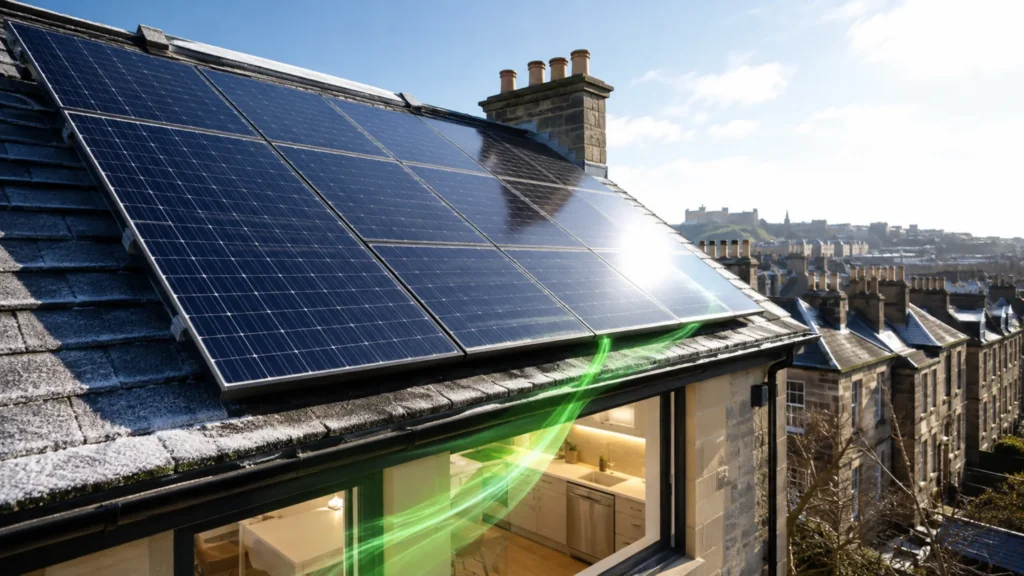
Most Edinburgh homeowners underestimate how much their solar system still contributes in winter.
A well-oriented 4 kW system generates around 900 to 1,100 kWh between October and March. Do solar panels produce much in winter or on dull days explains what realistic winter generation looks like and how to read your monitoring data correctly.
Keep Panels Clean
Every unit of winter generation is more valuable than a summer unit that exports at low rates.
Dirty panels in winter lose output at the time of year when you can least afford it. A professional clean in October ensures your system captures every available unit through the low-sun months.
Shift Loads to Generation Hours
Winter generation in Edinburgh typically peaks between 10am and 2pm on clear days.
Running your dishwasher, washing machine, and other large appliances during these hours means they run on solar rather than grid electricity. It costs nothing to implement.
Review Your Export Tariff
If you are still on a low flat-rate SEG tariff, winter is a good time to compare alternatives.
Every unit exported in winter is more valuable on a competitive tariff. Smart export tariffs, are they worth it compared to the main options available.
Use Your Battery More Effectively in Winter
Winter battery strategy is fundamentally different from summer. Battery settings for summer covers the summer side, but winter requires a different approach.
Set your battery to charge fully from solar when generation is available rather than holding a large minimum reserve that cloudy days may not refill.
If you are on a time-of-use import tariff, scheduling a partial overnight grid charge during periods of poor forecast generation keeps your battery available for morning and evening consumption without drawing from the grid at peak rates.
Consider a Heat Pump for Winter Heating
Heat pumps are significantly more efficient than gas or electric heating, and Edinburgh’s climate suits them better than most homeowners expect.
Modern air source heat pumps operate effectively down to -15°C, well below Edinburgh’s typical winter temperatures. A heat pump delivering a COP of 3.0 produces three units of heat for every one unit of electricity consumed.
Is it worth installing a heat pump to cover the financial case honestly, including payback periods for Scottish properties. Government funding through the Boiler Upgrade Scheme offers £7,500 toward installation, and free air source heat pump grants in Scotland covers additional Scottish funding available through Home Energy Scotland.
Switch to a Smart Electricity Tariff
A time-of-use tariff gives you control over when you pay peak rates.
Tariffs like Octopus Go offer overnight import rates as low as 7 to 9p per kWh compared to standard daytime rates of 24 to 28p. For households with a battery, EV, or both, scheduling overnight charging during off-peak periods significantly reduces winter costs. Choosing the right electricity tariff covers how to identify the right tariff for your setup.
Quick Wins That Cost Nothing
- Set your heating thermostat to 18 to 19°C. Each degree reduction saves approximately 10% on heating costs
- Use heating zones or smart controls to heat only occupied rooms
- Check your hot water cylinder thermostat is set to 60°C
- Bleed radiators before winter to clear airlocks reducing efficiency
- Confirm your boiler pressure is within the correct range, typically 1 to 1.5 bar
Conclusion
Reducing winter bills in Edinburgh is about stacking improvements that each contributes. Stop heat loss first, use your solar system and battery strategically, choose the right tariff, and consider longer-term investments like heat pumps where the numbers stack up.
The homeowners we work with who see the biggest savings are those who address the basics before adding technology, and then use that technology smartly.
Frequently Asked Questions
Do solar panels work enough in Edinburgh winter to make a difference?
Yes. A well-oriented 4 kW system generates 900 to 1,100 kWh between October and March, directly reducing grid imports during the months when electricity costs most.
What is the single most cost-effective winter energy improvement?
For most Edinburgh homeowners, draught proofing and loft insulation deliver the highest return relative to cost and are eligible for Home Energy Scotland support.
Can a heat pump heat my Edinburgh home effectively in winter?
Yes. Modern air source heat pumps operate effectively down to -15°C, well below Edinburgh’s typical winter temperatures. Properties replacing oil or LPG see the strongest financial returns.
Is it worth getting a smart tariff for winter?
Yes, particularly for households with a battery, EV, or both. Overnight off-peak rates of 7 to 9p per kWh compared to standard daytime rates of 24 to 28p create significant savings when charging is scheduled correctly.
How much can I save on winter energy bills?
Combining draught proofing, insulation, a smart tariff, and optimised solar and battery use can reduce winter bills by £300 to £700 annually for a typical Edinburgh three to four bedroom property.