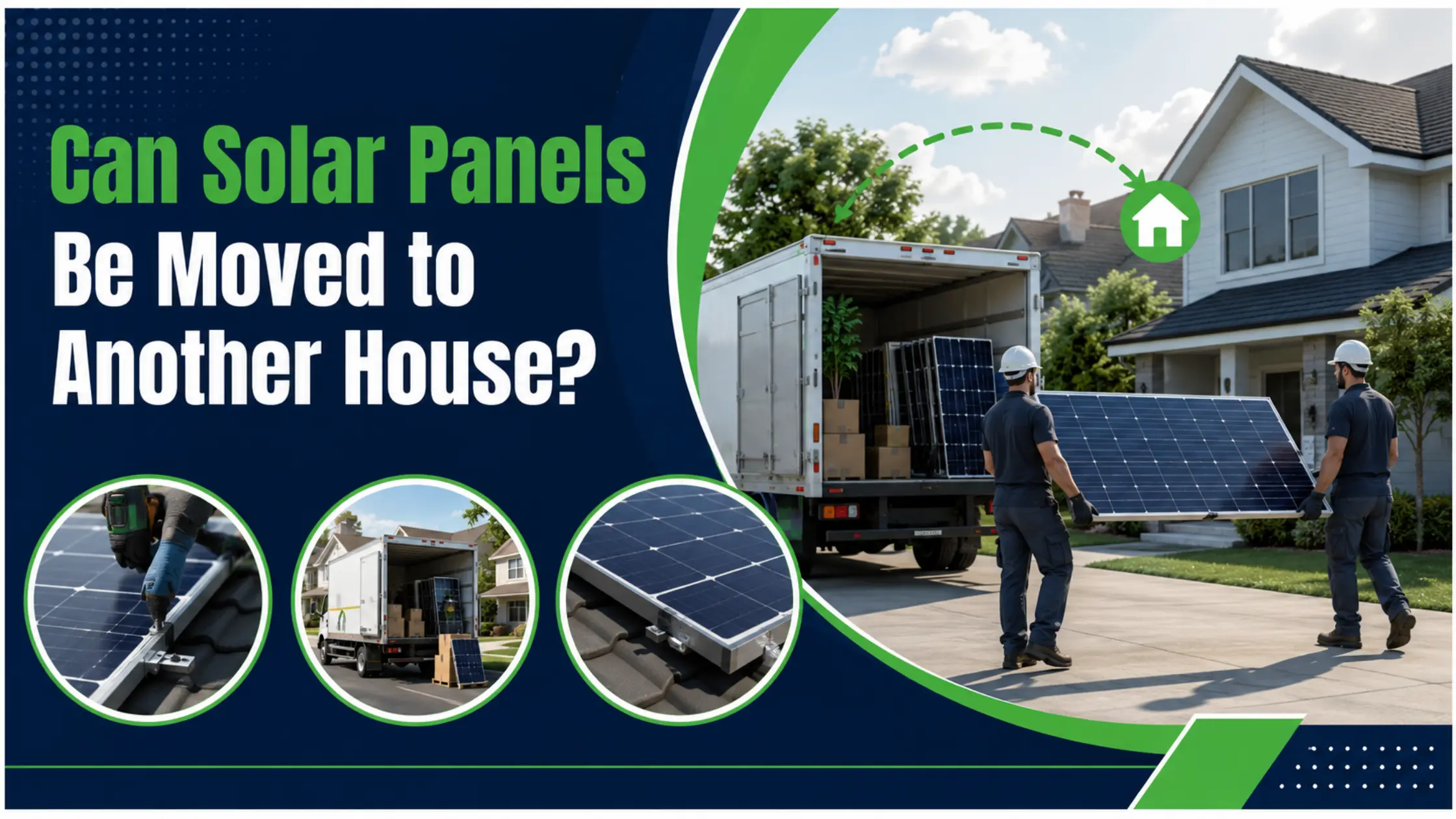
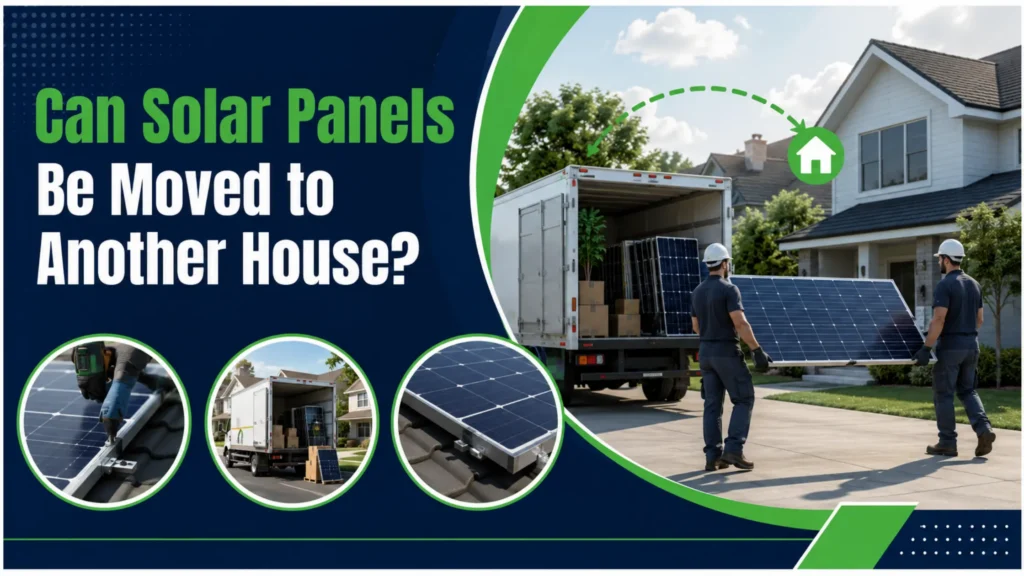
Moving house and wondering whether your solar panels can come with you? It is a reasonable question, especially when you have invested £6,000 to £10,000 in a system. The honest answer is that it is technically possible, but rarely the right financial decision. Here is why.
Is It Physically Possible to Move Solar Panels?
Yes. Solar panels can be uninstalled, transported, and reinstalled on a new property.
They are not permanently fixed in a way that makes removal impossible. The process involves disconnecting the system, removing mounting hardware, lifting panels off the roof, and reinstalling everything on the new property.
The question is not whether it can be done. It is whether it should be done.
Why Moving Solar Panels Rarely Makes Financial Sense
The Cost of Removal and Reinstallation
Removing a solar system and reinstalling it on a new property is not cheap.
A typical removal, transport, and reinstallation costs between £1,500 and £3,000 depending on system size, roof type, and access requirements. That cost comes before any new mounting hardware, updated DNO notification, new MCS certification, or roof repairs on the original property.
Your Panels Add Value to the Property You Are Selling
Solar panels typically increase property value by £5,000 to £10,000 depending on system size and location.
Removing them before sale reduces your asking price, potentially by more than the panels are worth on the secondhand market. Most estate agents will advise you to leave them and factor the value into the sale price instead.
Secondhand Panel Value is Lower Than You Think
Panels that are five or more years old have already degraded from their rated output.
A buyer purchasing a second-hand system is taking on panels with a shortened warranty life and reduced performance. The market price for used solar panels reflects this, and what you recover rarely justifies the removal cost.
Understanding solar degradation explains how panel output declines over time and why age significantly affects secondhand value.
The New Property May Not Be Suitable
Your old system was designed for your old roof, orientation, and shading profile.
The new property may have a different pitch, orientation, or available roof space that makes the existing system a poor fit. Forcing an ill-matched system onto a new roof is unlikely to deliver the generation performance the system was originally designed for.
When Does Moving Panels Actually Make Sense?
There are specific situations where relocation is worth considering.
Brand new panels on a system less than one or two years old. The panels retain most of their value and warranty life, and the financial case is stronger.
Moving to a property with no solar potential for a new installation. If the new property is ideal for solar and the current one is not, starting fresh with a new system designed for the new roof is almost always the better approach. Are solar panels worth it in Edinburgh covers what makes a property a good candidate for solar from the outset.
The buyer of your current property does not want the panels. This is rare but does happen. If the sale falls through without panels and the panels have genuine remaining value, relocation becomes more viable.

What Happens to Your MCS Certificate and Export Tariff?
This is one of the most overlooked complications of moving a solar system.
MCS Certification
Your existing MCS certificate is specific to the installation address.
Moving the system to a new property requires a completely new MCS installation by a certified installer. Without it, the panels are not eligible for the Smart Export Guarantee at the new address. Solar panel grants and funding in Scotland covers eligibility requirements and how MCS certification affects access to government schemes.
Smart Export Guarantee
Your current SEG tariff is tied to your existing address and metering arrangement.
You cannot transfer it to a new property. A new SEG application must be made at the new address once the system is reinstalled and MCS certified. Smart Export Guarantee covers the registration process and what documentation is required.
DNO Notification
The new installation at the new address requires a fresh DNO notification under G98 or G99 depending on system size.
This adds time and cost to the process and must be completed before the system can legally export to the grid.
What Should You Do Instead?
For most homeowners, the better approach is straightforward.
Leave the panels with the property and negotiate their value into the sale price. Buyers increasingly view solar as a genuine asset, and a well-documented system with warranties in place is a selling point rather than a complication.
Install a new system on your new property designed specifically for that roof. A system designed from scratch for the new property will outperform a relocated system that was never intended for that roof.
How much do solar panels cost in Edinburgh gives a detailed breakdown of current installation costs if you are considering starting fresh.
What Happens to the Warranty if Panels Are Moved?
Most panel manufacturers provide a 25-year performance warranty tied to the original installation.
Moving panels does not automatically void the warranty, but reinstallation must be carried out correctly by a qualified installer.
If the reinstallation causes damage or the panels are not correctly supported on the new mounting system, warranty claims become significantly more complicated to pursue.
Inverter warranties are typically 5 to 12 years and are similarly tied to correct installation conditions. An inverter relocated and reinstalled by a qualified engineer under the correct conditions retains its warranty, but this must be confirmed with the manufacturer before proceeding.
Conclusion
Solar panels can be moved, but for most homeowners it is not the right decision. The removal and reinstallation cost, the impact on property value, and the loss of MCS certification and export tariff eligibility at the current address make leaving panels with the property the more financially sensible choice in most cases.
Frequently Asked Questions
Will removing solar panels damage my roof?
Removal by a qualified installer is carried out carefully and roof penetrations are sealed on completion. However, some minor cosmetic marks where mounting hardware was fixed are common, particularly on older roofs. The condition of the roof before removal affects how clean the result is.
Do solar panels increase the value of my home?
Yes, typically by £5,000 to £10,000 depending on system size, age, and condition. A fully documented system with warranties in place and an active SEG tariff is a genuine selling point to buyers with an interest in reducing energy bills.
Can the buyer of my house keep the SEG tariff?
No. The SEG tariff is personal to the registered account holder. The buyer must apply for their own SEG tariff at the property after the sale completes. Most energy suppliers make this straightforward with the MCS certificate and installation documentation.
What documents should I leave with the property when I sell?
Leave the MCS certificate, all warranty documentation, inverter manuals, system monitoring login details, DNO notification confirmation, and any service records. A complete documentation pack makes the property more attractive to buyers and simplifies their SEG application.
Is it worth buying a house with existing solar panels?
Yes, in most cases. Existing solar reduces electricity bills immediately and the SEG tariff can be set up quickly with the right documentation. Asking the seller for a full documentation pack and checking the system’s recent generation history through the monitoring app gives a clear picture of what you are inheriting.