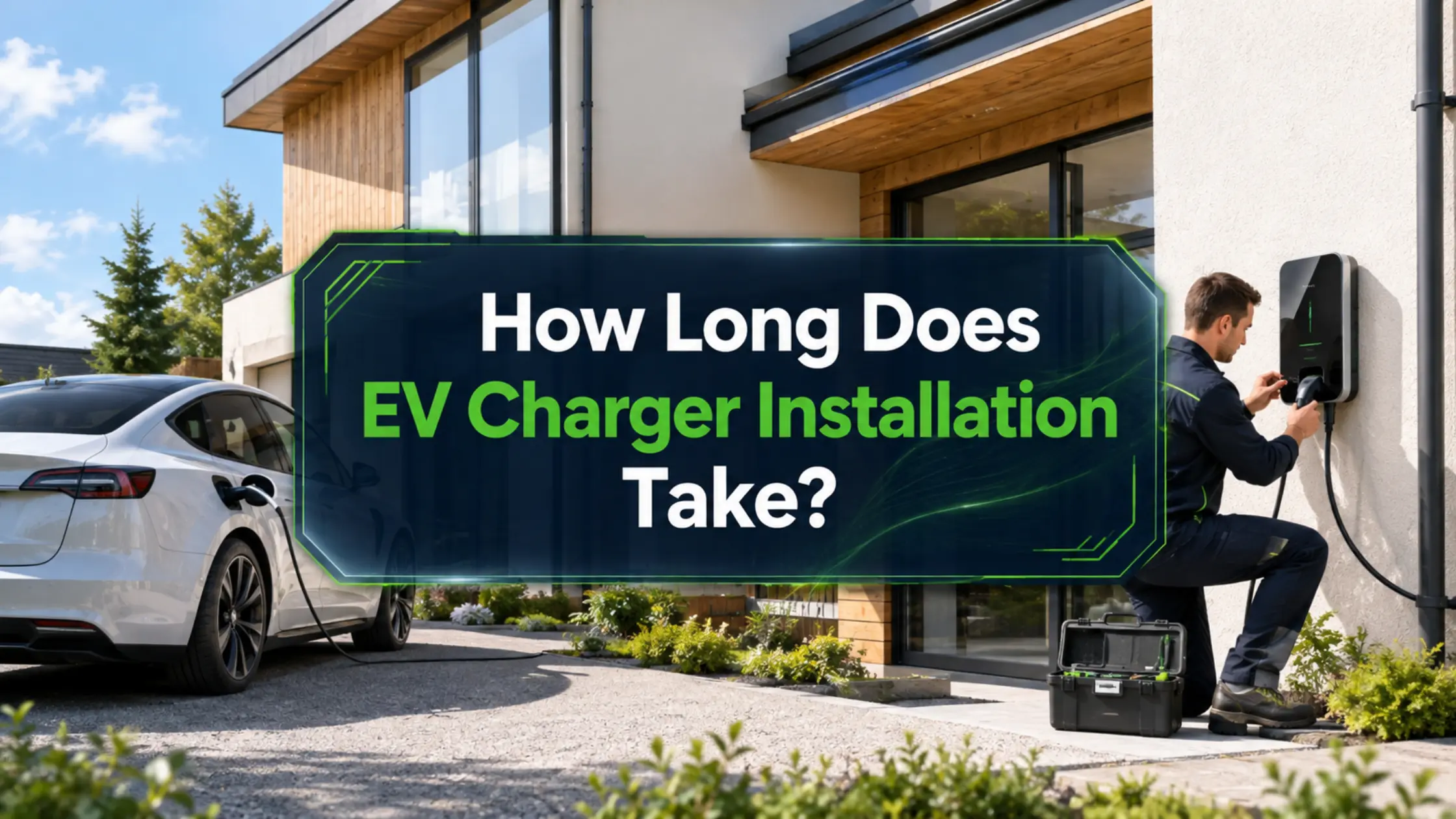
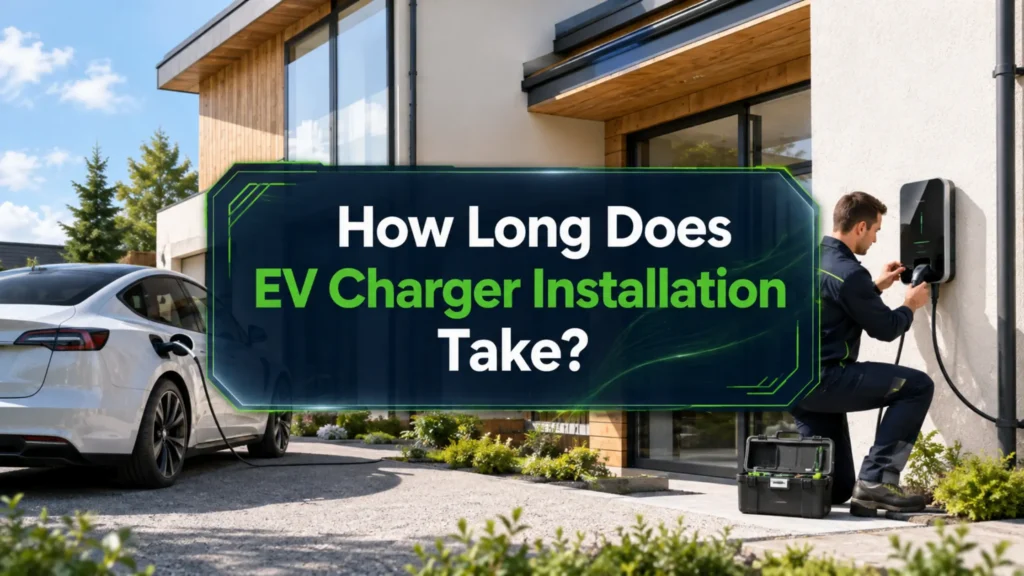
Most homeowners expect EV charger installation to take a full day. In reality, a standard home installation takes 2 to 4 hours. What takes longer is everything that happens before and after the engineer arrives.
Here is a clear breakdown of the full timeline from enquiry to first charge.
The Short Answer
A standard single EV charger installation on a house with an adequate consumer unit takes 2 to 4 hours.
That includes mounting the unit, running the cable, connecting to the consumer unit, and testing.
More complex installations take longer. Understanding what adds time helps you plan realistically.
Total Timeline Summary
| Stage | Typical Timeframe |
| Site survey and quotation | 2 to 5 days |
| DNO notification processing | 4 to 6 weeks |
| Scheduling after DNO approval | 1 to 3 weeks |
| Installation day | 2 to 4 hours |
| Total from enquiry to first charge | 6 to 10 weeks |
The Full Timeline From Enquiry to First Charge
Step 1: Site Survey and Quotation
Most reputable installers carry out a free site survey before quoting.
This takes 30 to 60 minutes and covers your consumer unit capacity, cable route, parking position, and DNO notification requirements. Some installers offer remote surveys via photos and video for straightforward properties.
Expect 2 to 5 days between enquiry and receiving a quotation.
Step 2: DNO Notification
This is the step most homeowners do not know about, and it is the one that adds the most time.
EV chargers above 3.68 kW require notification to your Distribution Network Operator before installation. Understanding G98, G99 and G100 explains what this involves and why it is legally required.
DNO notification typically takes 4 to 6 weeks to process. Your installer handles this on your behalf, but the clock starts from the day they submit it.
Step 3: Scheduling the Installation
Once DNO notification is confirmed, installation is scheduled.
Lead times vary by installer and season. Summer and January tend to be the busiest periods.
Expect 1 to 3 weeks from DNO confirmation to installation date.
Step 4: The Installation Itself
This is the part most homeowners focus on, and it is the shortest part of the process.
What happens on installation day:
- Charger unit mounted in agreed position
- Dedicated cable run from consumer unit to charger
- New MCB fitted in consumer unit
- Earthing and electrical safety checks
- System testing and commissioning
- App setup and handover
A standard house installation takes 2 to 4 hours.
Step 5: Commissioning and Registration
After installation, the charger is commissioned and tested.
If you are taking advantage of any smart tariff integration or solar surplus charging, app setup and configuration adds 30 to 60 minutes. Electric car charging at home covers what the commissioning process involves and what to check before the engineer leaves.
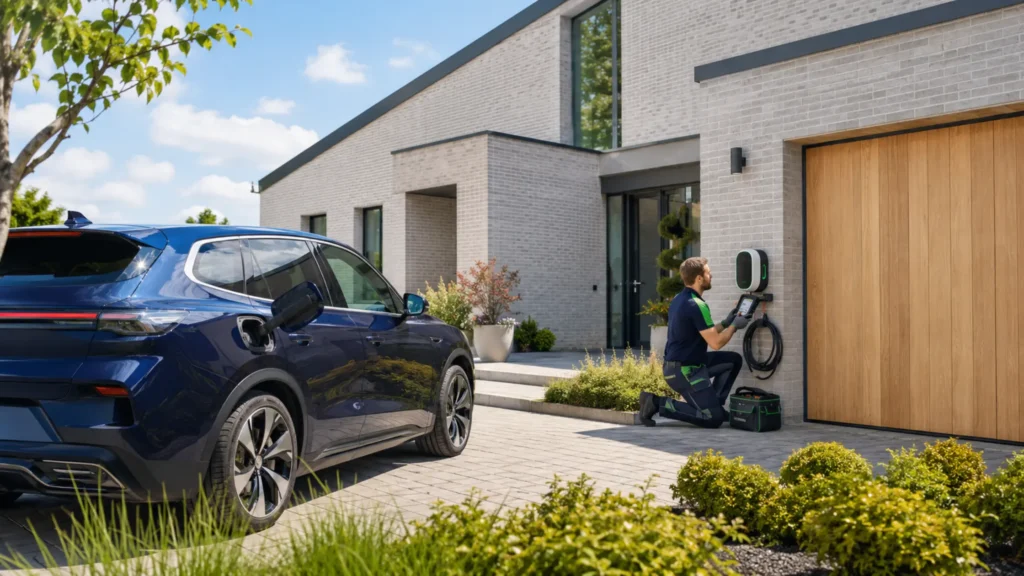
What Makes an Installation Take Longer?
Consumer Unit Issues
If your consumer unit has no spare ways or needs upgrading, installation takes longer.
A consumer unit upgrade adds 2 to 4 hours to the installation day and increases cost.
Long Cable Runs
The further the charger is from your consumer unit, the longer the cable installation takes.
A charger installed on the opposite side of the property from the consumer unit, or one requiring cable to run through multiple rooms or underground to a detached garage, adds 1 to 3 hours.
Underground Cabling to a Detached Garage
Installing a charger in a detached garage often requires underground cabling.
This typically requires a separate visit for groundworks before the charger installation day. It adds both time and cost to the overall project.
Supply Upgrade Required
If your property needs a supply upgrade from your DNO, this is arranged separately and can add 4 to 8 weeks to the overall timeline.
This is more common in older properties and those with multiple high-load additions like solar, batteries, and EV chargers being added at the same time. Can I install more than one EV charger at home to cover supply capacity in more detail for households considering multiple chargers?
Flat or Apartment Installations
Flat installations are often more complex than house installations.
Cable routing through communal areas, permission from factors or management companies, and access to communal electrical infrastructure all add time. Expect the overall timeline to be 2 to 4 weeks longer than a standard house installation.
Can It Be Done Faster?
Yes, in some cases.
Chargers below 3.68 kW do not require DNO notification and can be installed within days of enquiry. However, most homeowners install 7 kW chargers, which do require notification.
Some DNOs process notifications faster than the standard timeframe. Your installer will have a realistic sense of current processing times in your area.
What to Do While You Wait
The DNO notification period is the ideal time to:
- Decide on your charger position and check cable route options
- Set up your smart meter if you do not already have one
- Compare time-of-use tariffs to reduce overnight charging costs
- Check whether your charger will be solar-compatible if you have panels or plan to add them
How EV charging works and what it costs covers the running cost differences between standard and smart charging that make tariff choice worth thinking about before installation day.
Conclusion
The installation itself is quick. The timeline is driven almost entirely by DNO notification, which is outside your installer’s control but should always be handled by them on your behalf. Booking as soon as your EV arrives or is ordered, rather than waiting until it is delivered, is the single most effective way to reduce how long you wait for your charger to be ready.
Frequently Asked Questions
Can an EV charger be installed in one day?
Yes. The physical installation of a standard home EV charger takes 2 to 4 hours. The overall timeline from enquiry to first charge is 6 to 10 weeks due to DNO notification.
Do I need to be home during installation?
Yes. The engineer needs access to your consumer unit and the installation location. Most installations are completed in a single morning or afternoon visit.
Can I get an EV charger installed without a site survey?
Some installers offer remote surveys for straightforward properties. A site survey is always recommended for properties with older consumer units, long cable runs, or detached garages, as issues identified late add time and cost to the project.
What happens if my consumer unit needs upgrading?
Your installer will identify this during the site survey and include the upgrade in the quotation. A consumer unit upgrade adds 2 to 4 hours to the installation day and typically costs £300 to £600 additional.
Does solar panel ownership affect EV charger installation?
Not the installation itself, but it affects which charger you should choose. A solar-compatible smart charger like the myenergi Zappi allows your EV to charge from surplus solar generation automatically, which significantly reduces running costs over time.