
Most people assume summer is the obvious time to go solar. More sun, warmer weather, and longer days all sound like the perfect conditions.
But the reality is a little more interesting, and for many UK homeowners, summer might not be the smartest time to install at all.
Here is what the evidence actually says.
Does the Season You Install Actually Matter?
The short answer is yes, but probably not in the way you think.
The time of year does not affect how well your panels will perform over their lifetime. A system installed in January generates the same annual output as one installed in June, given the same roof and location.
What the season does affect is:
- How quickly you start generating after installation
- How busy installers are and how long you wait
- Whether you can take advantage of spring and summer generation from day one
- The condition of your roof during the installation process
Why Summer Feels Like the Right Time
It is easy to see why summer appeals. The days are long, the sun is higher in the sky, and generation figures look impressive on those first monitoring reports.
There is also a psychological pull. People think about energy bills more in summer when air conditioning and garden lighting add to consumption. Seeing neighbours with panels generating visibly on a sunny day triggers the decision for many households.
These are valid reasons to act, but they are not the strongest financial reasons to choose summer specifically.
The Case for Installing Before Summer
If timing matters, the argument for spring installation is stronger than summer.
You Capture the Best Months From Day One
A system installed in March or April starts generating during the UK’s peak solar months immediately.
Summer in the UK runs from June to August. Spring solar irradiance in Scotland is already strong, and installing in March or April means you do not miss May, which is consistently one of the highest generation months of the year.
Solar energy performance in Scottish weather shows how monthly generation varies across the year, and the April to August window accounts for the majority of annual output.
Installer Availability Is Better
Summer is the peak season for solar installers across the UK.
Demand spikes between May and August, which means longer waiting times, less flexibility on installation dates, and in some cases higher cost from companies running at full capacity.
Booking in late winter or early spring often means shorter lead times and more flexibility around your schedule.
Roof Work Is Easier in Dry Conditions
Spring offers a good balance of dry weather and mild temperatures that make roof work straightforward.
Installers work more efficiently in spring conditions than in the heat of midsummer, where roof surface temperatures can make working conditions uncomfortable and increase the risk of minor installation issues.
The Case for Installing in Autumn or Winter
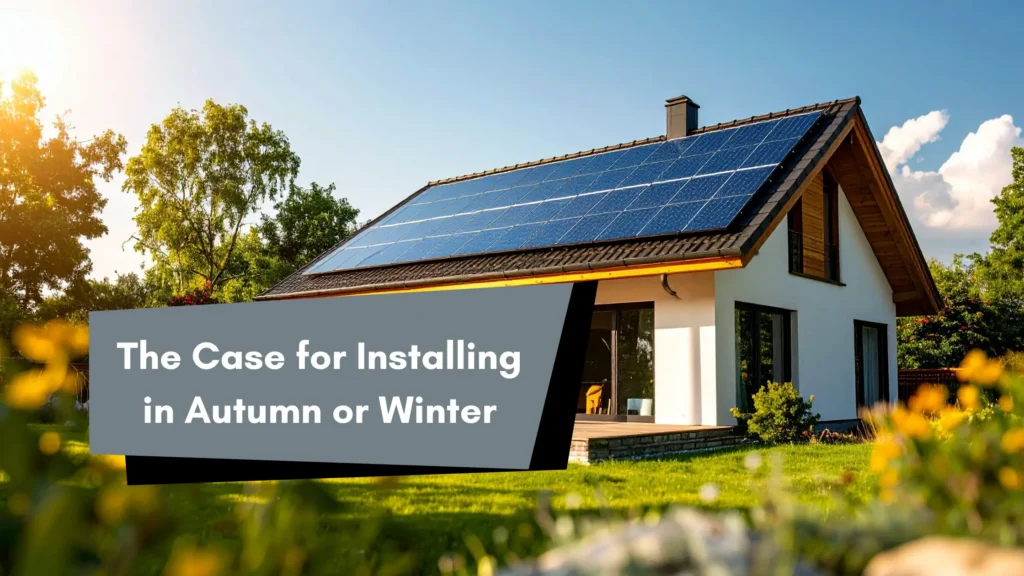
This surprises most people, but there is a genuine financial argument for installing outside the peak season.
Lower Demand, Faster Turnaround
Autumn and winter installations often come with shorter waiting times.
Reputable installers are less stretched between October and February, which can mean a faster survey to installation timeline. If you have been quoted a long lead time in summer, asking about an autumn slot is worth doing.
You Are Ready for Spring From Day One
A system installed in November or December is commissioned, tested, and fully set up before the high-generation months begin.
By the time April arrives, you have already learned how your system behaves, set up your monitoring, registered for the Smart Export Guarantee, and optimised your battery settings if you have storage fitted.
Smart Export Guarantee registration should happen immediately after installation, and having this sorted before spring means you do not miss a single unit of export income.
Winter Generation Is Better Than Most People Expect
Many homeowners delay installation because they assume winter solar in Scotland is barely worth having.
Do solar panels produce much in winter or on dull days addresses this directly. A well-installed Edinburgh system still generates meaningful output between October and February, and every unit generated during winter reduces your heating and lighting bills at the time of year when they are highest.
What About Summer Specifically?
Summer installation is not a bad choice. It is just not uniquely advantageous.
The panels will perform well from day one because conditions are good. You will see strong early generation figures that make the investment feel immediately worthwhile.
And if you have been considering solar for a while, there is real value in acting rather than waiting for a theoretically better time that may not be significantly better in practice.
The one genuine downside of peak summer installation is waiting times.
Does VAT or Pricing Change by Season?
Solar panel installation in the UK currently benefits from zero VAT, confirmed by HMRC following the Spring Budget 2022, and this applies year-round regardless of when you install.
Pricing from installers can vary slightly with demand, but reputable companies with fixed pricing structures do not typically charge more in summer. Getting multiple quotes at any time of year and comparing them carefully is more important than trying to time the market on price.
What Actually Matters More Than Timing
The season you install in has far less impact on your long-term returns than these factors.
- System size relative to your actual consumption
- Panel quality and temperature coefficient
- Roof orientation and shading assessment
- Installer quality and MCS certification
- Battery storage if your consumption pattern suits it
- Export tariff you register for after installation
According to the Energy Saving Trust, a correctly sized and installed solar PV system in Scotland typically saves between £500 and £900 per year on energy bills regardless of the month it was installed. The annual saving is driven by system design and energy use, not installation timing.
Conclusion
Summer is a perfectly good time to install solar panels, but it is not the best time for everyone. Spring gives you peak generation from day one with better installer availability. Autumn and winter installations mean you are fully set up and optimised before the high-generation months begin.
If you are ready to go, the best time to install is when you can get a quality, MCS-certified installer booked with a lead time that does not cost you a full season of generation.
Frequently Asked Questions
Does it cost more to install solar panels in summer?
Not typically from reputable installers with fixed pricing. Demand is higher in summer which can affect waiting times, but the price of the system itself should not change significantly with the season.
Will my panels generate less if installed in winter?
Your panels will generate less in the first few months simply because winter days are shorter. But annual output over the system’s lifetime is the same regardless of installation month, assuming the same roof and location.
How long does solar panel installation take from quote to switch-on?
The typical timeline from initial survey to completed installation is 6 to 10 weeks, including DNO approval which takes 4 to 6 weeks. This timeline applies year-round, though summer demand can extend it.
Is spring really better than summer for installation?
For most Edinburgh homeowners, yes. Installing in March or April means you capture the full April to August high-generation window from day one and avoid the peak summer installer backlog.
Can I install solar panels in winter in Scotland?
Yes. There is no technical barrier to winter installation in Scotland. Roof work requires dry conditions, which are less consistent in winter, but a good installer will schedule around the weather. Generation starts immediately after commissioning.