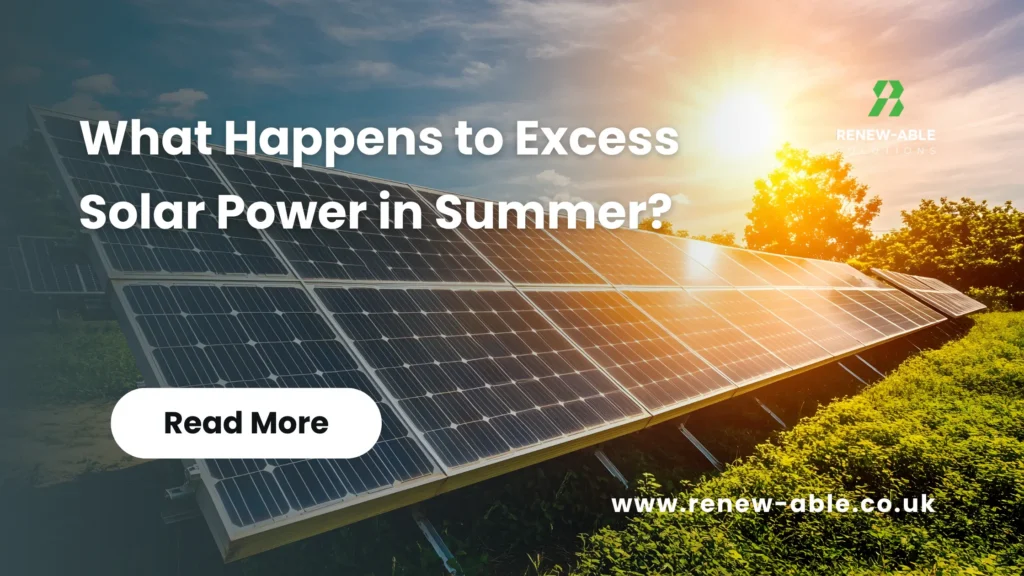
On a clear July day in Edinburgh, a 4 kW solar system can generate 20 to 25 kWh of electricity. The average household uses around 8 to 10 kWh per day.
That leaves a significant surplus, and what happens to it depends entirely on how your system is set up.
The Four Things That Can Happen to Excess Solar Power
Where your surplus goes depends on your system configuration and tariff setup.
| What Happens | How | Result |
| Battery storage fitted | Surplus charges the battery first | Used later, free of charge |
| SEG tariff registered | Overflow exports to the national grid | Earns 4p to 15p per kWh |
| Diverter installed | Surplus diverted to hot water cylinder | Free hot water |
| None of the above | Surplus flows to grid unregistered | Zero return, electricity wasted |
In our experience, a significant number of homeowners who come to us for servicing have never registered for an export tariff and have been giving electricity away for free since installation. Smart Export Guarantee registration is free, takes minutes, and should happen the day your system is commissioned.
Option 1: Battery Storage
A battery captures surplus generation and uses it later, but in summer it fills faster than most homeowners expect.
How Quickly Does It Fill?
A 10 kWh battery paired with a 4 kW system is typically full by 11am on a clear summer day.
The remaining afternoon generation, potentially another 10 to 15 kWh, still needs somewhere to go. Home battery storage covers how to size a battery correctly so you are not losing generation through the summer months.
What Happens After It Is Full?
Surplus still exports once the battery is full. This is why even battery owners need a competitive SEG tariff registered alongside their storage.
Option 2: Smart Export Guarantee
The SEG is the UK government scheme requiring licensed electricity suppliers to pay homeowners for exported electricity.
What Rate Will You Get?
Flat rate tariffs pay between 4p and 15p per kWh. Dynamic tariffs like Octopus Agile pay considerably more during evening peak periods.
According to Ofgem, every licensed supplier with more than 150,000 customers must offer an SEG tariff, so every Edinburgh homeowner with an MCS-certified installation is eligible.
Is It Worth Switching Tariffs?
A 4 kW system exporting 1,500 kWh at 8p per kWh earns around £120 over summer. Switching from a default supplier rate to a competitive tariff can double that figure. Smart export tariffs, are they worth it, compares the main options and helps you find the right fit.
Option 3: Solar Diverter Devices
A solar diverter redirects surplus generation to your hot water cylinder before it reaches the grid.
How Does It Work?
When the diverter detects surplus power, it fires your immersion heater using solar electricity instead of grid electricity.
Heating water from the grid costs around 28p per kWh. Using surplus solar costs nothing. In summer, a diverter provides effectively free hot water for months at a time.
Is It Worth the Investment?
A diverter costs £300 to £600 installed and pays for itself within one to two summer seasons.
It is the most cost-effective upgrade for homes without battery storage and a useful complement to batteries for homes that have both.
Option 4: Smart Load Shifting
Shifting large household loads to coincide with peak generation absorbs surplus directly without any additional hardware.
Everyday Appliances
Running dishwashers, washing machines, and tumble dryers between 10am and 3pm means they run on solar rather than grid electricity.
No additional equipment is needed, just a change in habit that reduces grid imports meaningfully over a full season.
EV Charging
A solar-aware charger like the myenergi Zappi absorbs 3 to 7 kW of surplus automatically when your car is plugged in.
Electric car charging at home covers which chargers support solar surplus charging and how to configure them.
The Edinburgh Grid and Summer Surplus

On peak generation days, export from residential solar across Edinburgh creates voltage rise on local streets, which is a genuine challenge for Scottish Power Networks.
Using battery storage and diverters to absorb surplus locally helps the wider network as much as your own finances. Does the Edinburgh grid limit solar exports explains what happens when the local network cannot absorb further export and what Edinburgh homeowners can do about it.
The Right Priority Order for Summer Surplus
This is the sequence that delivers the best financial return for most Edinburgh households.
- Fill your battery first
- Divert surplus to hot water
- Charge your EV with solar-aware charging
- Run large appliances during peak generation hours
- Export the remainder via a competitive SEG tariff
Conclusion
Excess solar in summer is an opportunity, not a problem. The difference between a well-configured system and a poorly configured one is the difference between earning meaningfully from your surplus and handing it to the grid for free.
A competitive SEG tariff and a hot water diverter are the lowest-cost first steps and between them cover the majority of what most Edinburgh homeowners need.
Frequently Asked Questions
Am I legally entitled to be paid for my solar exports?
Yes, if your system is MCS-certified. Under the Smart Export Guarantee, all licensed suppliers with more than 150,000 customers must offer an export tariff. You need to register actively, it does not happen automatically.
How much can I earn from exporting surplus solar in summer?
A typical 4 kW Edinburgh system can earn between £80 and £200 from exports over a summer season depending on the tariff and how much surplus the battery and diverter do not absorb.
Can I have both a battery and a diverter?
Yes, and it is often the most effective combination. The battery charges first, the diverter absorbs surplus into hot water, and anything remaining exports via your SEG tariff.
My system is old and I have never received export payments. What should I do?
Check whether you have a smart meter installed, contact your supplier, and ask whether you are registered for the Smart Export Guarantee. You cannot backdate payments but you can start earning immediately once registered.
What is passive export and is it happening to me?
Passive export is when surplus electricity flows to the grid and you receive nothing for it. If you are unsure, check your electricity bill for any export credit line. If there is none, contact your supplier immediately.