Most homeowners install solar panels and assume they will simply get on with it, and for the most part they will. But like any system running continuously for 25 years, solar panels need professional attention to keep performing at their best.
This guide covers everything you need to know, from how often to service, what is included, what it costs, and how to choose the right engineer.
How Often Do Solar Panels Need Servicing?
The industry standard recommended by the MCS and most leading manufacturers is a professional inspection once every 12 months.
Some installers suggest every two years for newer systems in good condition, but annual servicing is the safer position for UK homeowners. The UK climate, particularly in Scotland, accelerates certain types of wear that less frequent checks can miss entirely.
If your system includes home battery storage, annual servicing is not optional as battery management systems and DC wiring require regular inspection to operate safely.
What Is Included in a Solar Panel Service?
A professional solar service covers every component that affects safety, performance, and longevity, not just the panels themselves.
Panel and Mounting Inspection
An engineer carries out a visual inspection of every panel for microcracks, delamination, discolouration, and surface soiling.
Mounting hardware, rail fixings, and roof penetrations are checked for corrosion and movement. In the UK’s wet climate, roof penetrations can deteriorate faster than expected if the original sealing was not carried out to a high standard.
DC Cable and Connector Checks
DC cables are inspected for insulation damage, UV degradation, and loose or corroded connectors.
Damaged DC connectors are a leading cause of DC arcing, which is a recognised fire risk in solar installations. The IET Wiring Regulations (BS 7671) require DC wiring in solar PV systems to be inspected periodically, and annual servicing satisfies this requirement.
Inverter Inspection and Testing
The inverter is checked for error logs, firmware updates, cooling fan operation, and signs of internal stress.
Most inverters record historical fault data that is not visible in standard monitoring apps. Reviewing this data can identify a developing fault before it causes a system failure. Understanding what a hybrid inverter does is a useful context if your system includes battery integration, as hybrid inverters carry additional servicing requirements.
RCD and Protection Device Testing
RCDs, RCBOs, and surge protection devices are tested to confirm they trip correctly under fault conditions.
These devices degrade over time and a device that looks fine visually may no longer function within specification. Testing them annually is the only reliable way to confirm they are working as required.
Battery System Checks
Where battery storage is fitted, the service includes a state of health check on the battery cells, inspection of DC busbar connections, and verification of battery management system settings.
The difference between LiFePO4 and lithium-ion batteries affects how they degrade over time, which means the servicing focus varies depending on which chemistry your system uses.
Performance Verification
The engineer compares your system’s current output against its expected generation for the time of year.
A system that has quietly degraded by 15 to 20% will not trigger any obvious alerts but will be costing you money every day. Understanding solar degradation explains how panel output declines over time and what the acceptable range looks like.
Signs Your System Needs Servicing Sooner
Annual servicing is the baseline, but some situations call for an earlier inspection.
Contact a qualified engineer promptly if you notice any of the following:
- Your system is shutting down unexpectedly, even on good generation days
- Generation figures have dropped noticeably compared to the same period last year
- Your inverter is displaying error codes that have not cleared themselves
- You can see visible damage to panels, cables, or mounting hardware after a storm
- Your monitoring app has stopped updating or is showing unusual readings
Why solar panel output varies day to day helps distinguish normal weather-related dips from a genuine performance drop worth investigating.
Why UK Conditions Make Servicing More Important
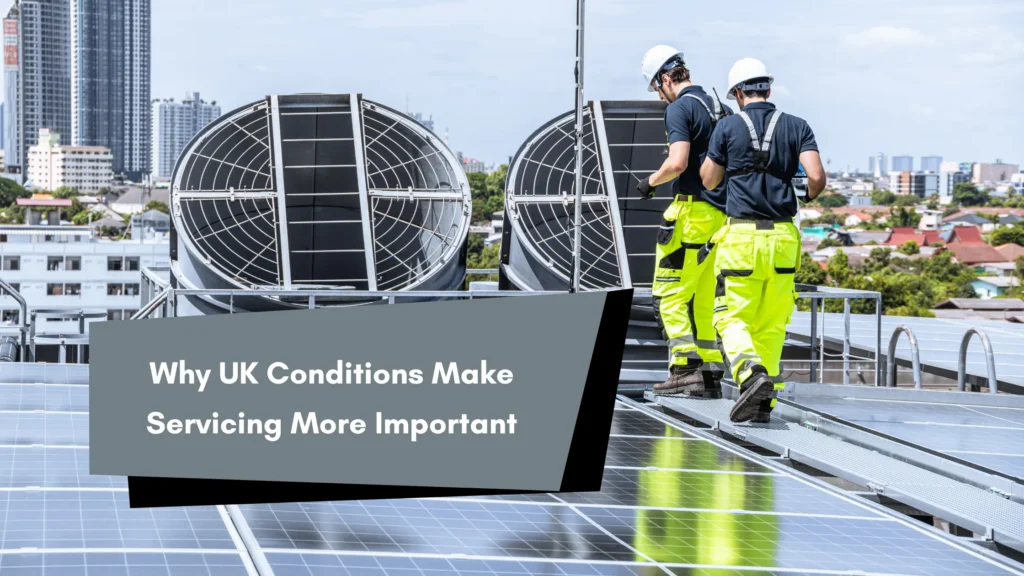
The UK climate creates specific wear patterns that make annual servicing more valuable here than in sunnier, drier parts of Europe.
Rainfall and Moisture Ingress
Persistent damp accelerates the degradation of DC connectors, cable insulation, and unsealed roof penetrations.
Moisture ingress into junction boxes is one of the most common causes of fault-based shutdowns found during UK solar inspections.
Biological Growth
Lichen, moss, and algae grow on panel surfaces in the UK at a rate that warmer countries do not experience.
Biological growth holds moisture against the panel surface and over several years contributes to frame corrosion and seal degradation. Solar panel maintenance covers what homeowners can do between professional visits and what should always be left to a qualified engineer.
Wind Loading on Mountings
The UK, and Scotland in particular, subjects solar mounting systems to significant wind loading throughout the year.
Annual torque checks on mounting hardware confirm that fixings have not worked loose under repeated wind stress. A loose mounting bracket caught during a service costs very little to fix. Left until it fails, the consequences are far more expensive.
Reduced Winter Output
UK systems generate significantly less in winter, and that reduced output can mask a performance fault for months before it becomes obvious.
Servicing in autumn, before generation drops to its winter low, means any issues are caught while there is still enough output to confirm the system is performing correctly. Do solar panels produce much in winter? explains what normal winter output looks like so you have a reliable baseline to work from.
Does Servicing Affect My Warranty?
This is one of the most important and most misunderstood aspects of solar ownership.
Most solar panel manufacturers provide a 25-year performance warranty and a separate product warranty of 10 to 12 years. Most inverter manufacturers provide warranties of 5 to 12 years.
What the small print of many of these warranties states is that the warranty is conditional on the system being maintained in line with manufacturer guidelines, which typically includes periodic professional inspection.
If your system develops a fault and you cannot demonstrate that it has been serviced, the manufacturer may reject your warranty claim. An annual service report provides the documented evidence that protects your position if you ever need to use it.
Does Servicing Affect My Home Insurance?
Increasingly, yes. Home insurance policies covering solar PV systems are beginning to include maintenance clauses that require policyholders to keep the system in serviceable condition.
Following a fire or storm incident involving solar panels, insurers have sought to limit liability where no evidence of maintenance exists. Checking your home insurance policy for any solar-specific conditions and keeping annual service reports is straightforward protection that most homeowners overlook.
What About Self-Monitoring Between Services?
Professional servicing once a year does not mean ignoring your system for the other 364 days.
Most modern inverters include a monitoring app that shows daily generation figures and flags error codes. Checking your generation weekly and comparing it to the same period in previous years is a simple habit that catches a drop in output early.
Here is what homeowners can safely check themselves between professional visits:
- Check your monitoring app weekly for generation figures and error codes
- Keep outdoor units and panel surfaces clear of leaves and debris
- Look for obvious physical damage after severe weather
- Note any unusual sounds from your inverter
- Check that your isolator switches are in the correct position if generation drops to zero unexpectedly
How Much Does a Solar Panel Service Cost in the UK?
Professional annual servicing for a standard residential solar PV system typically costs between £99 and £200 including VAT, depending on system size and whether battery storage is included.
A system losing 15% output due to an undetected fault costs a typical 4 kW installation around £90 to £135 per year in lost generation at current electricity prices, before factoring in eventual repair costs. Annual servicing pays for itself in most cases.
| Service Type | Typical Cost (inc VAT) |
| Standard solar PV service | £99 to £150 |
| Solar PV with battery storage | £150 to £200 |
| Commercial system service | From £200 |
| Panel cleaning (combined with service) | £50 to £100 additional |
How to Choose a Solar Servicing Engineer
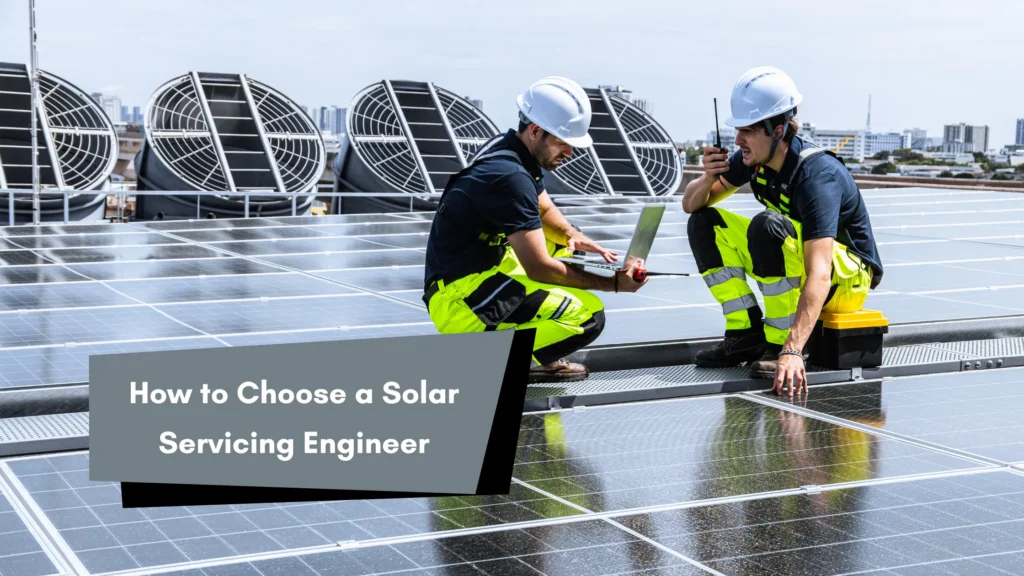
Not all servicing companies are equal, and choosing the wrong one can leave gaps in your warranty and insurance protection.
Check MCS Certification
Look for an MCS-certified installer or servicing company. MCS certification is the recognised standard for solar PV work in the UK and confirms the engineer has the qualifications to work on your system legally and safely. You can verify any company’s status at mcscertified.com.
Ask for a Written Service Report
Any reputable company provides a written report on completion covering all inspection findings, performance readings, and recommendations.
This document is what you produce if a warranty claim or insurance issue ever arises. A company that does not provide one is not providing a complete service.
Check They Service All Makes and Models
Your servicing engineer should be able to work on your specific inverter and panel brand, not just the systems they install themselves.
Ask directly whether they are familiar with your equipment before booking.
Avoid Unusually Low Prices
A service priced significantly below £99 is likely skipping components of the inspection.
DC connector testing, RCD verification, and inverter fault log review all take time. A thorough service cannot be completed in under two hours for a standard residential system.
Solar Panel Servicing Checklist
Use this as a reference when booking or reviewing a service to make sure nothing is missed.
- Panel visual inspection for cracks, delamination, and soiling
- Mounting hardware and roof penetration check
- DC cable and connector inspection
- Inverter error log review and firmware check
- RCD and surge protection device testing
- Battery state of health check (where applicable)
- Generation performance verification against expected output
- Written service report provided on completion
Conclusion
Solar panels should be professionally serviced once a year in the UK. The combination of wet climate, wind loading, biological growth, and the complexity of systems with battery storage makes annual inspection genuinely worthwhile rather than optional.
It protects your warranty, satisfies insurance requirements, and ensures your system generates what it should. For most homeowners, the cost of a service is returned through improved performance within the same year.
Frequently Asked Questions
Do solar panels really need annual servicing?
Yes, particularly in the UK. The wet climate, biological growth, and wind loading create wear patterns that annual inspection catches before they develop into costly faults or safety risks.
Can I service my solar panels myself?
Homeowners can carry out basic visual checks and clean panels safely from ground level.
DC electrical components, inverter internals, RCD testing, and mounting torque checks must be carried out by a qualified engineer. Working on live DC solar circuits without the right training is a serious safety risk.
What happens if I do not service my solar panels?
Performance degrades gradually without any obvious warning.
Faults that would cost little to fix when caught early become expensive repairs or full component replacements. Warranty claims may be rejected and insurance cover may be limited without evidence of maintenance.
How long does a solar panel service take?
A standard residential solar service is typically completed in 2 to 3 hours in a single visit.
Systems with battery storage or larger commercial arrays take longer.
Does servicing include panel cleaning?
Professional cleaning is often offered alongside servicing but is a separate item.
It is worth combining both in the same visit to reduce access costs where scaffolding is required.
How do I find a qualified solar servicing engineer in Scotland?
Look for an MCS-certified company and verify their status at mcscertified.com.
A reputable company will provide a written report on completion covering all inspection findings and any recommendations for remedial work.