
Summer is when your solar system should be working hardest, longer days, stronger sunlight, and the best generation of the year.
But if your panels are covered in a season’s worth of dirt, bird droppings, and biological growth, you may not be getting anywhere near what your system is capable of.
Here is what the evidence says and what Edinburgh homeowners should actually do about it.
How Much Output Can Dirty Panels Actually Lose?
The performance loss from dirty panels is real, but it varies significantly depending on what type of soiling is involved.
| Soiling Type | Estimated Output Loss |
| General dust and light pollution | 2 to 5% |
| Pollen deposits during peak season | 5 to 10% |
| Bird droppings on a single panel (string inverter) | Up to 30% on affected string |
| Lichen and biological growth | 10 to 20% on affected area |
On a 4 kW Edinburgh system generating around 3,400 kWh annually, even a 5% loss equates to roughly 170 kWh of electricity every year. Bird droppings are the most serious problem because they block light completely rather than just diffusing it, making localised soiling disproportionately damaging on string inverter systems.
Why Summer Makes Soiling Worse
Most homeowners assume winter is the bigger problem for dirty panels, but summer creates its own specific soiling conditions.
Pollen Season
Between April and July, pollen deposits coat panel surfaces across the UK. Unlike rain-washed dust, pollen is sticky and does not clear easily between dry spells.
Scotland experiences significant birch, grass, and rapeseed pollen seasons, and panels in areas close to farmland or parks accumulate visible yellow deposits that reduce light transmission across the entire panel surface.
Bird Activity
Summer brings increased bird activity around rooftops, particularly from pigeons, starlings, and gulls.
Bird droppings contain uric acid which, if left on a panel surface long enough, can etch the anti-reflective coating permanently. Solar panel bird proofing is worth considering if your roof regularly attracts roosting birds, as prevention is significantly cheaper than the cleaning and potential coating damage that repeated fouling causes.
Dry Spells and Dust Accumulation
Extended dry periods in summer mean rainfall is not clearing the panel surface as regularly as it does through autumn and winter.
Airborne particles, traffic pollution, and construction dust accumulate during dry spells and form a thin film that diffuses incoming light. Edinburgh’s mix of urban traffic and coastal air means panels here pick up a combination of particulates that does not wash off completely between rain events.
Lichen and Moss Growth
Lichen and moss establish more aggressively during warmer months on panels that are not regularly cleaned.
Biological growth holds moisture against the panel surface and physically blocks light across the affected area. Unlike dust, lichen cannot be removed by rain and requires manual cleaning with appropriate tools.
Left for multiple seasons, it can cause permanent staining and surface degradation that reduces output even after removal.
How Soiling Affects Different Inverter Systems
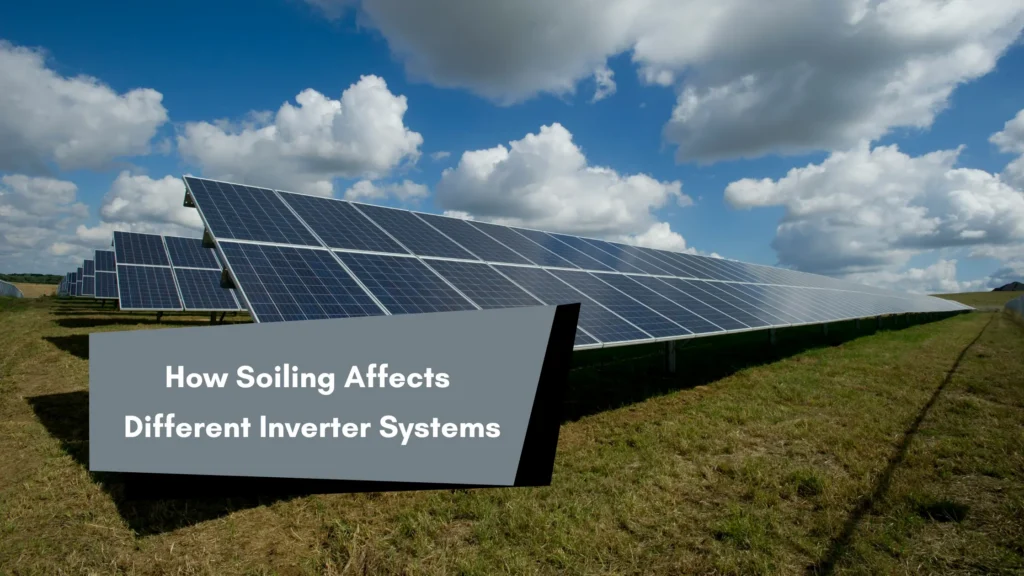
Not all solar systems respond to soiling in the same way, and understanding the difference is useful before deciding how urgently to clean.
String Inverters
On a string inverter system, all panels in a string are limited by the weakest performing panel.
A single bird dropping on one panel forces every other panel in that string to reduce output to match it. This is the scenario where soiling causes disproportionate losses relative to the area actually covered.
If your system uses a string inverter and you have heavy localised soiling on any panel, cleaning becomes more urgent. Inverter or micro inverter covers the practical differences between the two approaches and how they handle uneven soiling conditions.
Micro Inverters and Power Optimisers
Systems with micro inverters or power optimisers give each panel independent operation, which means soiling on one panel does not affect the others.
Output loss is still real on the affected panel, but it is contained rather than multiplied across the string. For Edinburgh rooftops with complex shading and regular bird activity, this architecture offers a meaningful advantage in managing soiling-related losses.
Does Rain Clean Solar Panels in the UK?
This is the most common assumption Edinburgh homeowners make, and it is only partially true.
Rainfall does remove loose dust and some light soiling, and panels installed at an angle of 15 degrees or more benefit from reasonable self-cleaning during normal UK rainfall patterns. The UK Met Office confirms that Scotland receives significantly above-average annual rainfall compared to southern England, which does help. However, rain does not remove bird droppings, lichen, pollen deposits, or the residue left after evaporation of dirty rainwater.
The result is that panels in the UK stay cleaner than in arid climates but still accumulate enough soiling over a summer to cause measurable performance losses, particularly in urban areas and on rooftops with regular bird activity.
How to Tell if Your Panels Need Cleaning
You do not always need to get on the roof to know your panels need attention.
Check your monitoring app and compare current daily generation against the same period in previous years. A consistent unexplained drop of 5 to 10% or more during a dry spell is a reasonable indicator that soiling is a factor. From ground level, visible bird droppings, a yellowing tint from pollen, or green patches indicating biological growth are all clear signs that cleaning will recover lost output.
Why solar panel output varies day to day is a useful reference for separating weather-related variation from soiling-related performance loss.
How Often Should Solar Panels Be Cleaned in the UK?
For most UK residential installations, professional cleaning once or twice a year is sufficient to maintain performance within an acceptable range.
Properties near farmland, under flight paths, or in areas with heavy bird activity may benefit from more frequent cleaning. Combining panel cleaning with your annual service visit is the most cost-effective approach, as access equipment is already on site and the engineer can carry out a visual inspection at the same time.
Solar panel maintenance covers the full maintenance schedule recommended for UK systems and how cleaning fits into the wider servicing picture.
According to the Solar Energy Industries Association, regular cleaning combined with routine maintenance can preserve up to 97% of a panel’s rated output over its operational lifetime compared to systems that receive no maintenance.
The MCS recommends that cleaning and inspection be carried out by a qualified professional to avoid voiding panel warranties through incorrect cleaning methods or products.
What Is the Right Way to Clean Solar Panels?
Using the wrong method can cause more damage than the soiling itself.
What Works
Panels should be cleaned with deionised or purified water and a soft brush or squeegee specifically designed for solar panel cleaning.
Deionised water leaves no mineral residue after drying, which is the main advantage over tap water. Professional cleaning systems use purified water fed through a brush on an extendable pole, which avoids the need for roof access on most standard residential installations.
What to Avoid
Never use abrasive materials, high-pressure washers, or household detergents on solar panels.
High-pressure water can force moisture into junction boxes and connectors, and abrasive tools scratch the anti-reflective coating that contributes to panel efficiency. Scratches cannot be reversed and cause permanent output reduction. The manufacturer’s cleaning guidelines should always be followed to maintain warranty validity.
DIY vs Professional Cleaning
Homeowners can safely clean panels from ground level using a purified water-fed pole system.
Accessing the roof directly to clean panels is a safety risk for untrained homeowners and is not recommended. Professional cleaning companies carry the correct equipment, insurance, and training to clean safely and effectively without voiding your warranty.
The Financial Case for Keeping Panels Clean
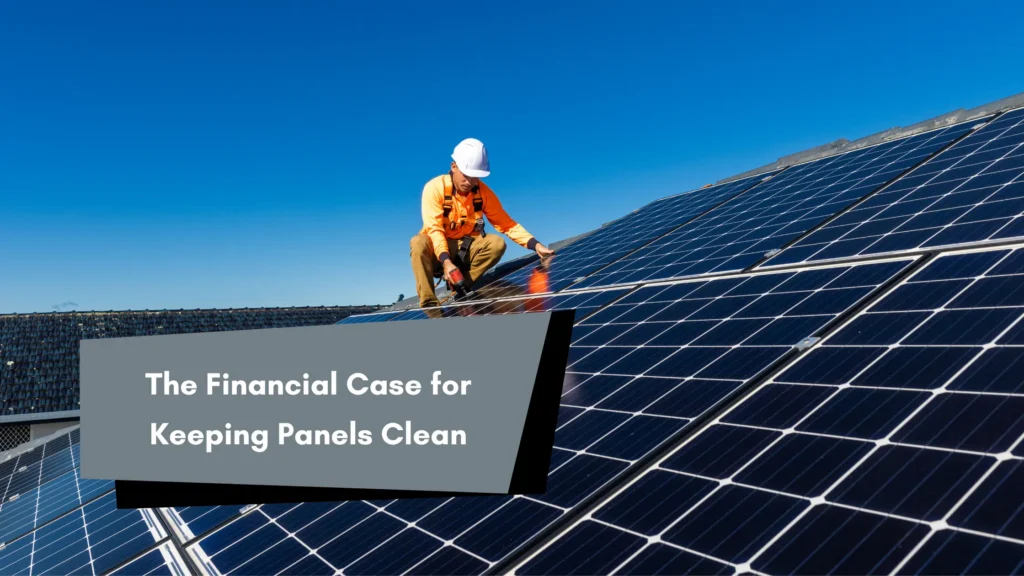
Running the numbers makes the case for regular cleaning straightforward.
A 4 kW Edinburgh system generating 3,400 kWh annually at a blended value of approximately 28p per kWh produces around £952 of electricity value per year. A 10% soiling-related output loss costs around £95 annually.
Professional solar cleaning typically costs £50 to £100. The return on investment for cleaning is achieved within the same year in most cases, and the protection it provides against permanent coating damage from bird fouling or lichen adds further long-term value.
For a detailed look at how system size affects output and financial returns, the Energy Saving Trust’s solar calculator provides a useful starting point based on your location and roof orientation.
Conclusion
Dirty solar panels do reduce output in summer, and the losses are more significant than most homeowners expect, particularly on string inverter systems with localised bird fouling or pollen deposits. Rain helps but does not solve the problem entirely.
Annual or biannual professional cleaning, combined with regular monitoring of your generation figures, is the most practical way to keep your system performing at its best through the months when it matters most.
Frequently Asked Questions
How much output do dirty solar panels lose?
General soiling typically reduces output by 2 to 5% in UK conditions. Localised soiling from bird droppings on a string inverter system can cause disproportionately higher losses of up to 30% on the affected string.
Does rain keep solar panels clean in the UK?
Rainfall removes loose dust and light soiling from panels installed at sufficient tilt angles. It does not remove bird droppings, lichen, pollen deposits, or evaporation residue. Regular professional cleaning is still necessary for panels in the UK.
Can I clean solar panels myself?
You can clean panels safely from ground level using a purified water-fed pole system. Accessing the roof directly is not recommended for untrained homeowners. Using tap water, abrasive materials, or high-pressure washers risks permanent coating damage and may void your panel warranty.
How often should I clean my solar panels?
Most UK residential installations benefit from professional cleaning once or twice a year. Properties near farmland, under flight paths, or with significant bird activity may need more frequent attention.
When is the best time to clean solar panels?
Early spring before the pollen season begins and late summer after peak bird activity are both good timings for UK homeowners.
Combining cleaning with your annual service visit in autumn is a practical approach that minimises access costs.
Will cleaning my panels void the warranty?
Cleaning carried out correctly using manufacturer-approved methods and deionised water will not void your warranty. Using abrasive tools, harsh chemicals, or high-pressure water can void the panel warranty by damaging the anti-reflective coating.