For businesses considering commercial solar in Scotland, rising electricity costs, grid uncertainty and increasingly important sustainability targets are all part of the decision. Onsite renewable energy can be more than an environmental measure. Designed around the site’s real energy demand, it can become a long-term commercial asset.
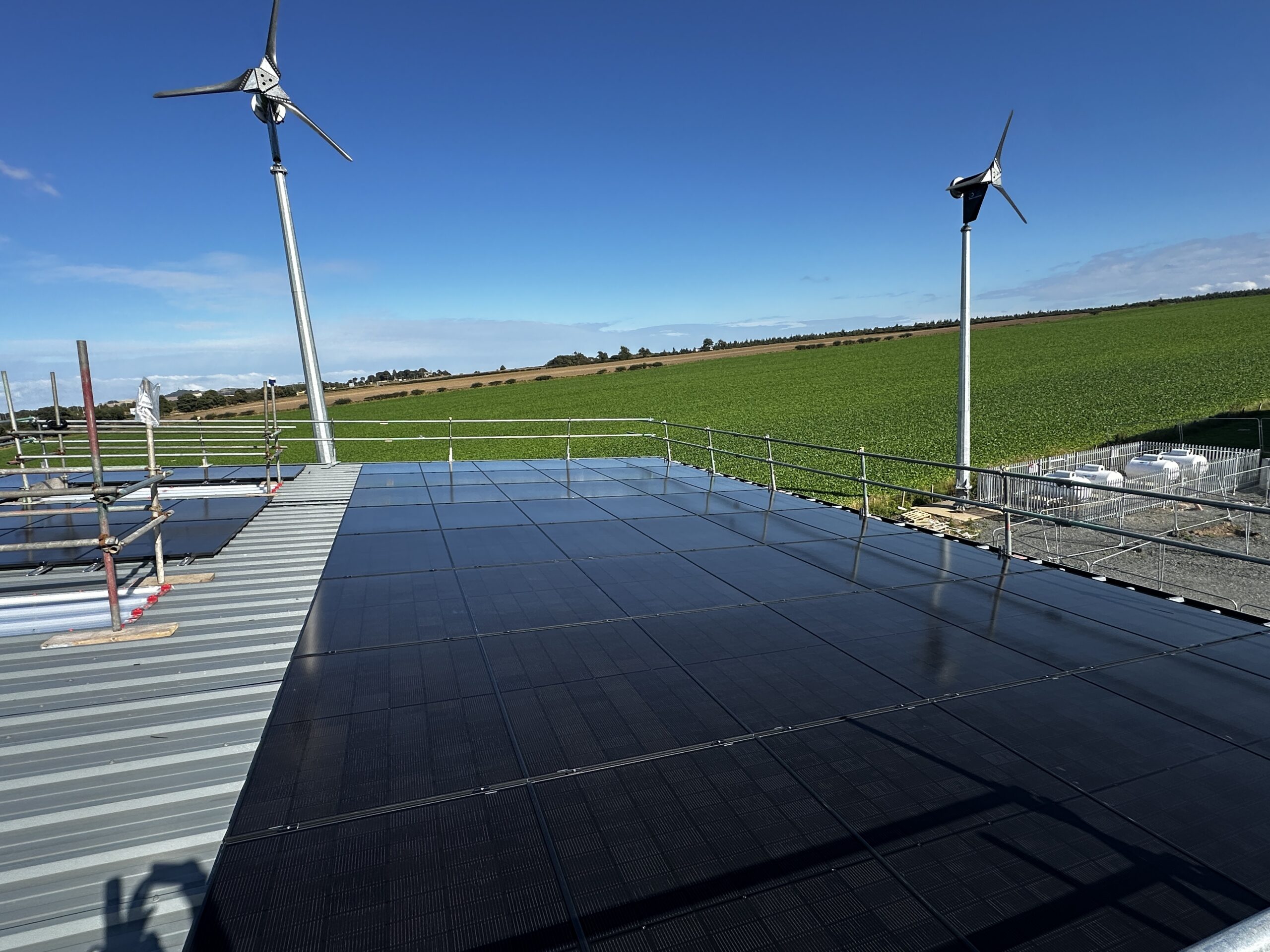
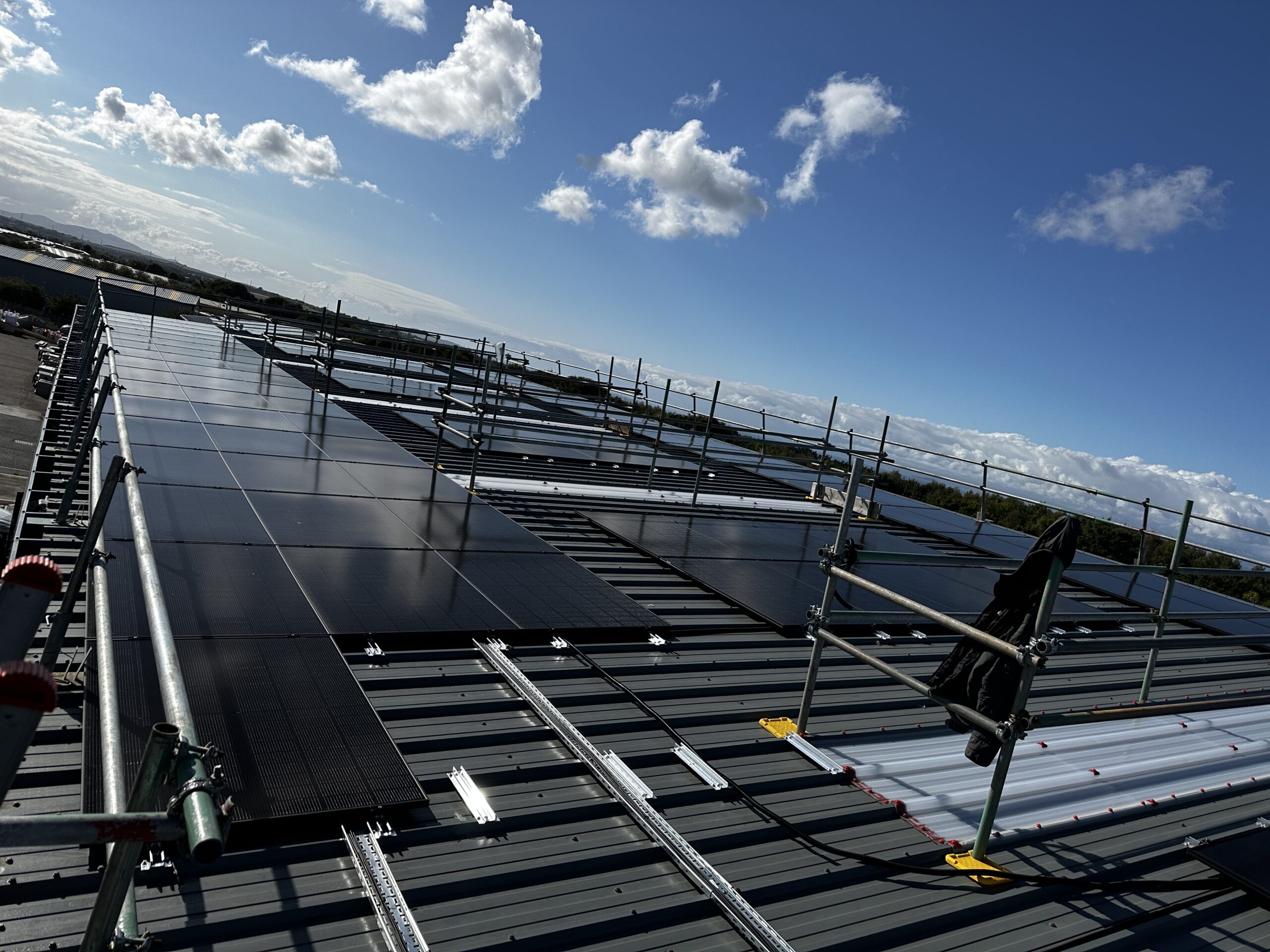
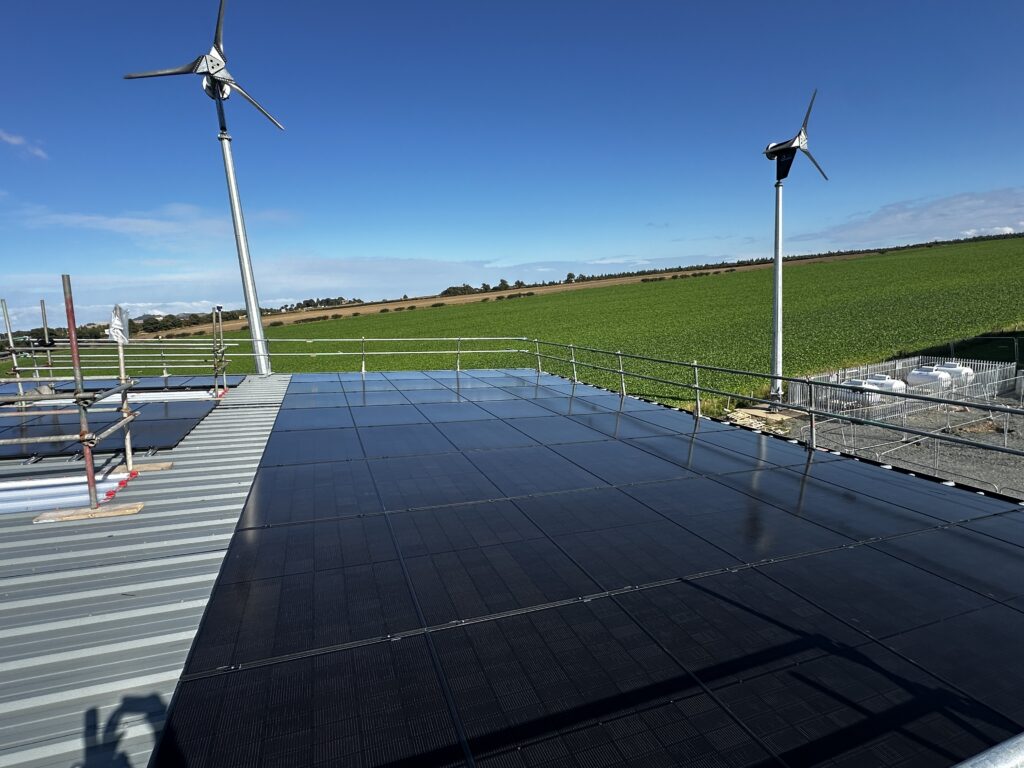
This completed Scottish project shows the scale of what an integrated system can achieve. Renew-Able Solutions delivered a combination of 143kWp of commercial solar PV, 80kWh of battery storage and 24kW of wind generation. Based on the project figures, the estimated return on investment was just over four years.
Watch the completed commercial solar, battery storage and wind installation.
Commercial renewable energy designed as one system
The project brought three complementary technologies together:
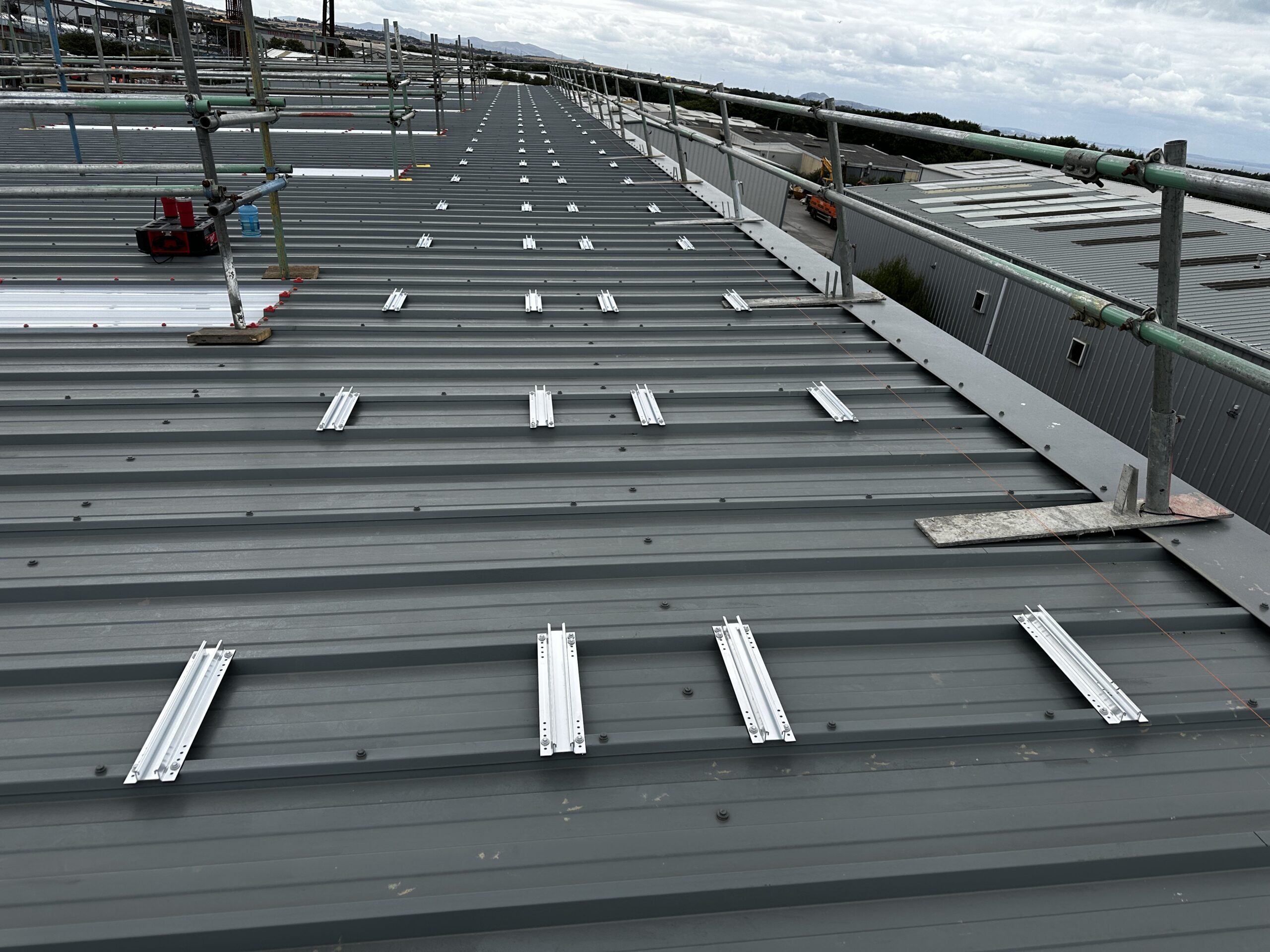
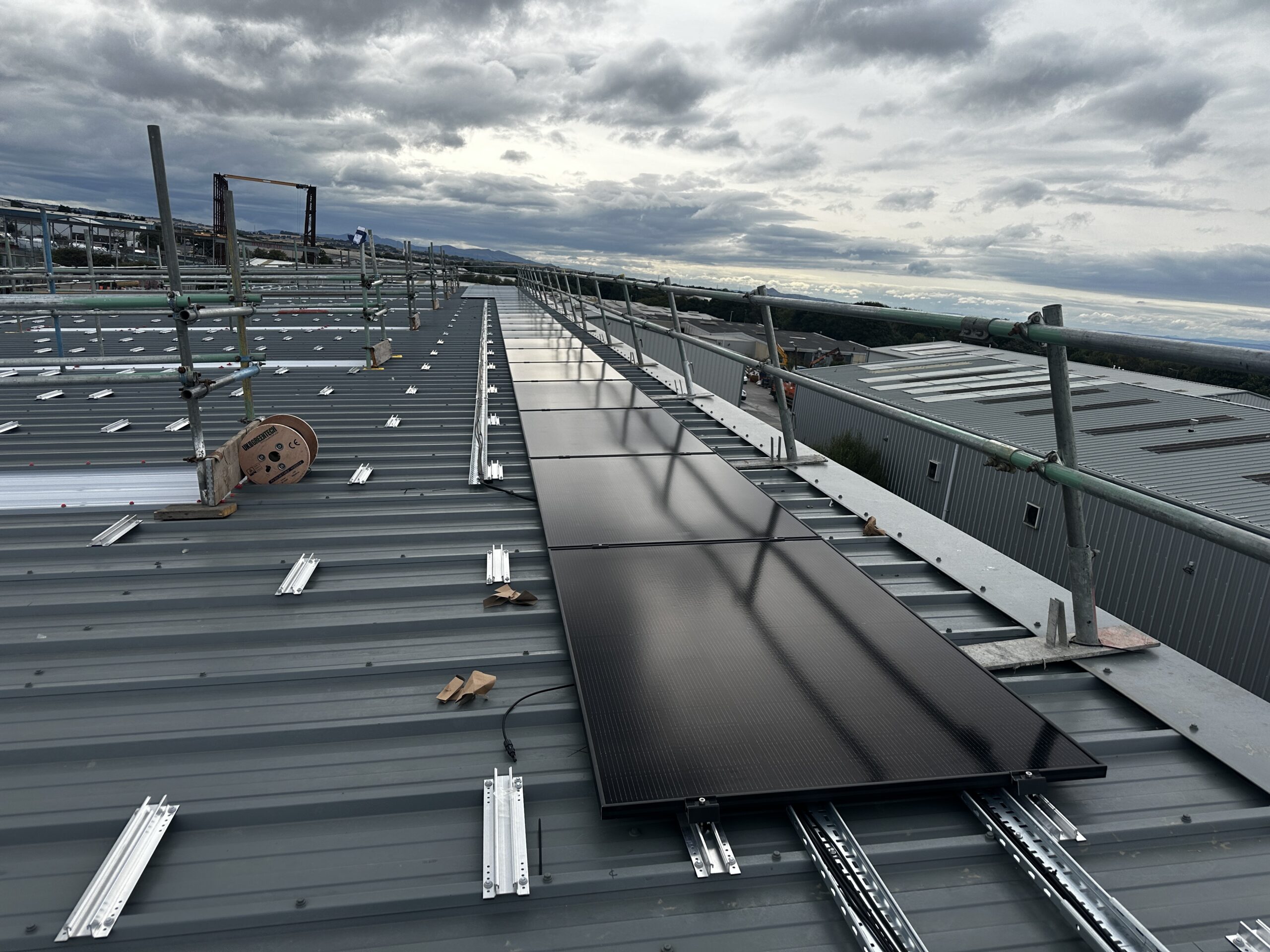
- 260 × 550W solar PV panels, providing a total installed solar capacity of 143kWp;
- 80kWh of battery storage paired with Sunsynk hybrid inverters; and
- two 12kW wind turbines, adding 24kW of onsite wind-generation capacity.
Each technology performs a different role. The solar array produces electricity during daylight hours, the turbines can contribute when wind conditions are suitable, and the battery provides greater flexibility over when onsite energy is used. The result is a coordinated energy system rather than three separate installations.
Why the load profile matters
Commercial solar is most effective when the design begins with the business’s electricity consumption. Half-hourly data can show when demand rises, how consistent it is across the week and how seasonal operating patterns affect consumption.
For a site with substantial daytime demand, solar generation can be consumed directly as it is produced. This reduces the amount of electricity imported from the grid. Battery storage can capture suitable surplus generation and make it available later, subject to the system design, tariff and operating strategy.
That is why the headline number of panels is only one part of a commercial proposal. The roof or ground area, structural capacity, electrical infrastructure, grid connection, operating hours and future energy plans all influence the right system size.
An estimated return on investment of just over four years
The projected financial outcome was a central feature of this installation. Based on the project assumptions, the integrated renewable-energy system achieved an estimated return on investment of just over four years.
Every commercial project is different, so that figure should not be treated as a standard result or guarantee. Electricity use, energy prices, generation, finance costs, export arrangements, maintenance and available space can all change the business case. A reliable proposal should therefore state its assumptions clearly and model the site using appropriate consumption and generation data.
Beyond the payback period, the installation was designed to provide several long-term commercial benefits:
- a substantial reduction in imported electricity costs;
- less exposure to future grid-price volatility;
- more predictable long-term energy planning;
- greater use of electricity generated onsite; and
- stronger evidence for ESG and decarbonisation reporting.
The role of commercial battery storage
The 80kWh battery system gives the business more control over the energy produced onsite. Depending on configuration and operating requirements, commercial batteries may store surplus renewable generation, help shift consumption away from higher-cost periods and support a more coordinated energy strategy.
Battery capacity should not be selected in isolation. It needs to be considered alongside the solar array, inverter capacity, load profile, tariff structure and intended operating mode. Oversizing a battery without enough usable energy to charge and discharge it can weaken the financial case; undersizing may leave valuable flexibility unused.
Combining solar and wind generation
This project also includes two 12kW wind turbines. Solar and wind can have different generation patterns, so a suitable site may benefit from using both. Wind feasibility, however, is highly location-specific. Local wind resource, turbulence, planning requirements, access, grid capacity and nearby constraints must all be assessed before a turbine is recommended.
The combined approach helped the business progress towards Net Zero operations powered by onsite generation. It also demonstrates why commercial decarbonisation is best treated as an engineering and financial design exercise, not simply an equipment purchase.
How a Power Purchase Agreement can improve business profitability
Some businesses have an attractive site and strong energy demand but do not want to commit capital to purchasing a system outright. In suitable cases, a Power Purchase Agreement (PPA) may provide an alternative route.
Under a PPA structure, a funding provider typically finances the installation and the business purchases the electricity generated onsite under an agreed long-term contract. If the contracted electricity rate is lower than the comparable grid rate, the business may begin reducing its operating costs without first funding the full installation.
For a suitable business, this can support profitability in several ways:
- Little or no upfront capital: cash that might have been spent on the solar installation remains available for equipment, staffing, stock or expansion.
- Potential energy savings from the start: purchasing onsite renewable electricity at an agreed rate may reduce the cost of each unit compared with imported grid electricity.
- More predictable costs: an agreed pricing structure can make long-term budgeting easier and reduce exposure to energy-market volatility.
- Capital can stay focused on growth: the business can direct available funds towards activities that generate revenue while the renewable system targets lower overheads.
- Savings can be reinvested: lower electricity expenditure may improve operating margin and release cash for other business priorities.
A PPA does not guarantee profit, and the commercial benefit depends on the agreed tariff, indexation, contract length, generation, electricity use and other terms. These figures should be modelled against the business’s current and expected energy costs before an agreement is signed.
What a commercial solar assessment should cover
A credible commercial renewable-energy proposal should normally include:
- Energy review: analysis of bills and half-hourly consumption data where available.
- Site assessment: roof or ground condition, shading, access, structural considerations and equipment locations.
- Electrical and grid review: supply capacity, connection arrangements and the appropriate network application.
- System design: solar layout, inverter selection, battery strategy and monitoring requirements.
- Financial modelling: stated assumptions for generation, self-consumption, tariffs, export and expected savings.
- Delivery planning: programme, access, safety, commissioning, handover and ongoing support.
Plan your commercial solar project in Scotland
Renew-Able Solutions designs and installs commercial renewable-energy systems across Scotland, with projects assessed around the property, energy use, technical constraints and commercial objectives.
Learn more about our commercial solar panel installation service, or contact Renew-Able Solutions to request an initial commercial energy assessment. If capital expenditure is a concern, ask whether a PPA or another suitable funding structure could be considered for your project.