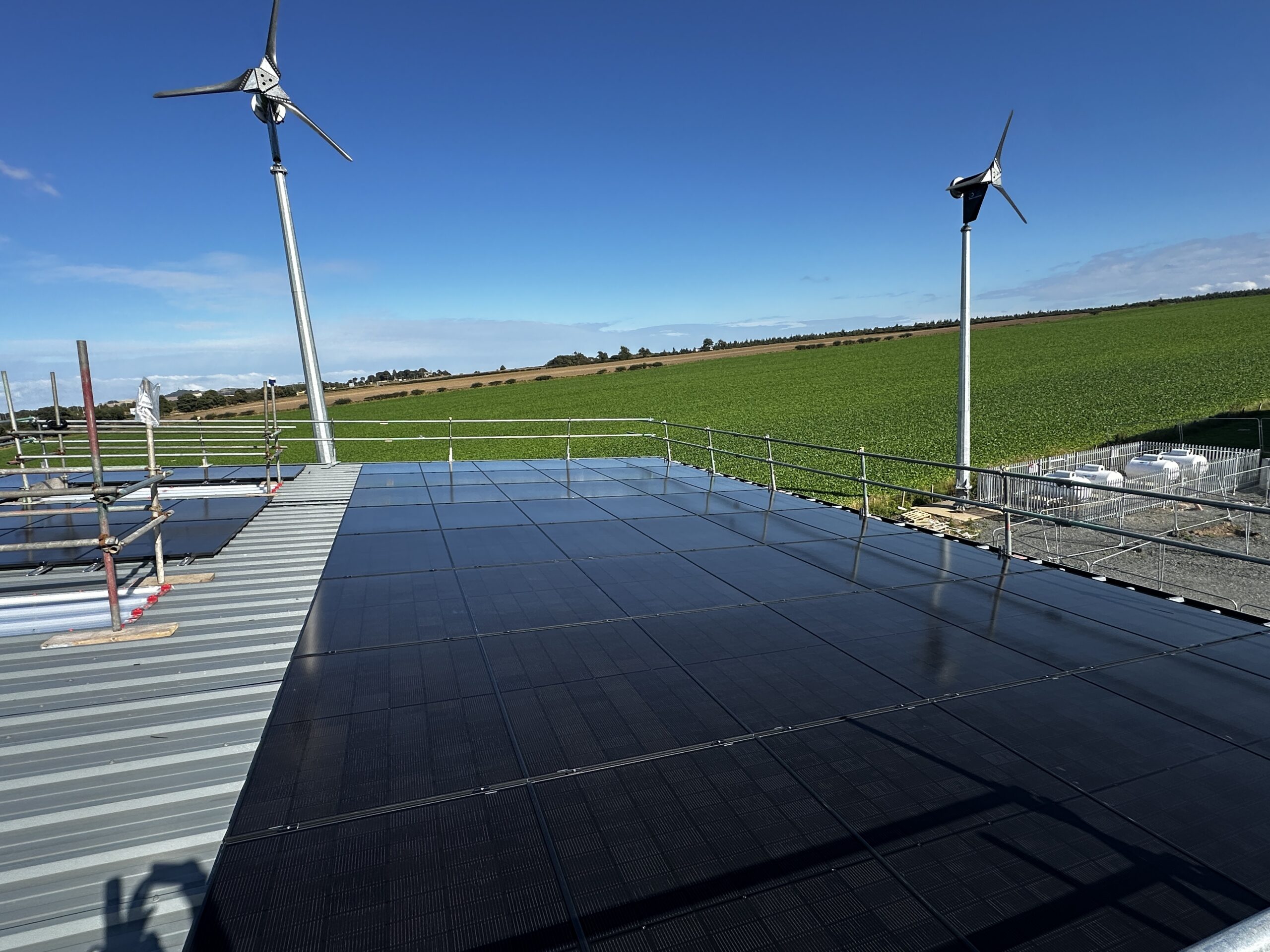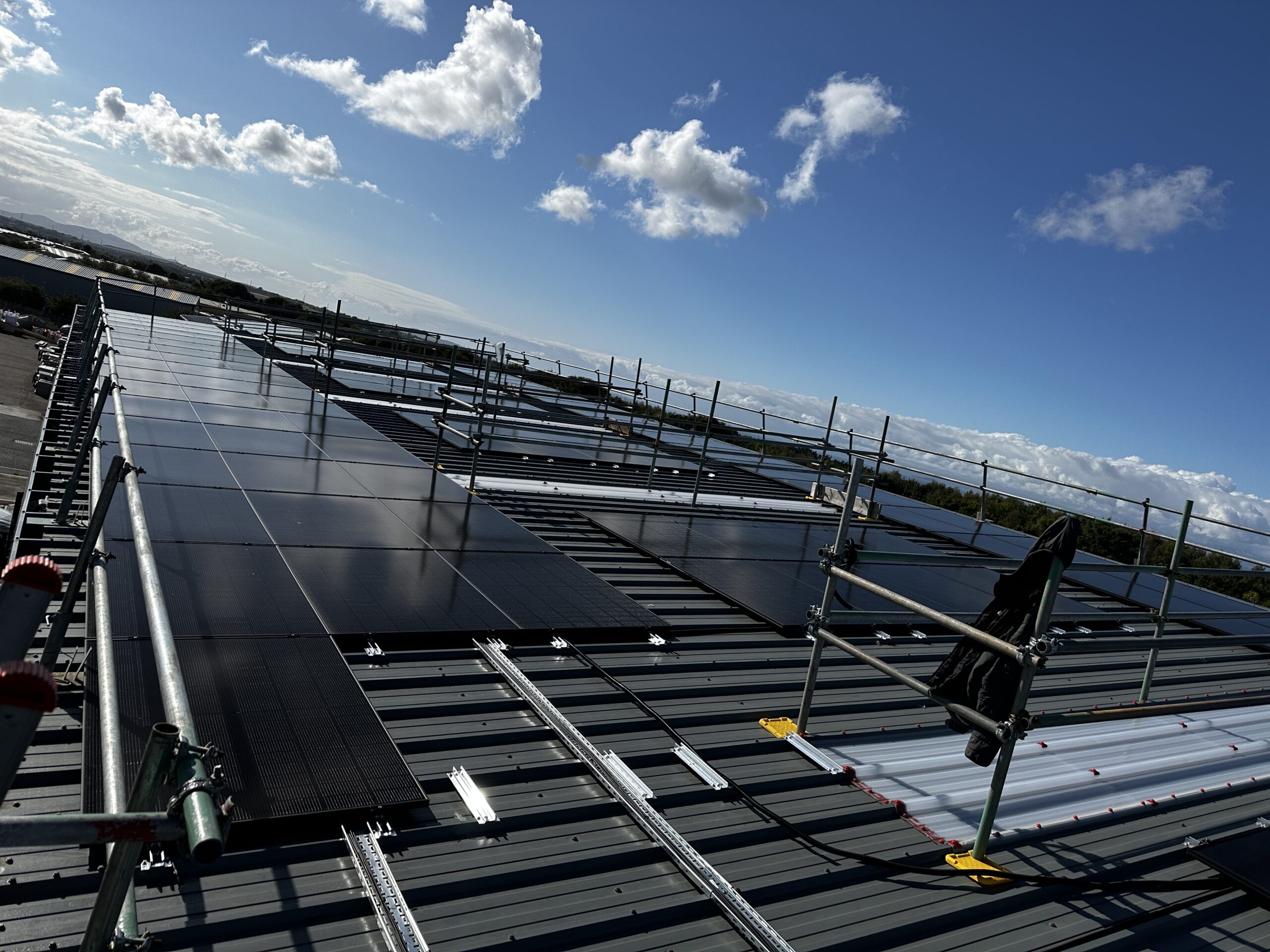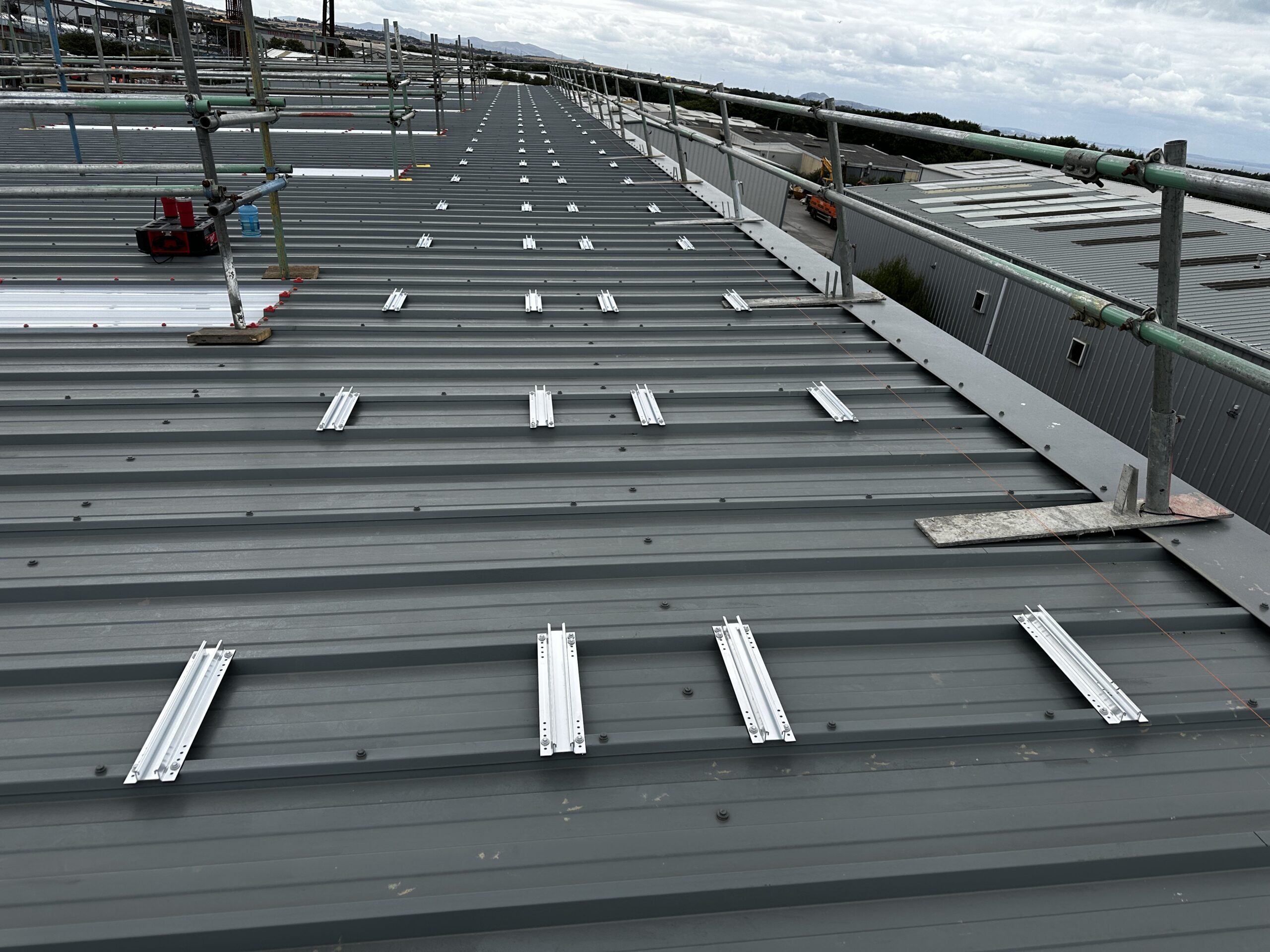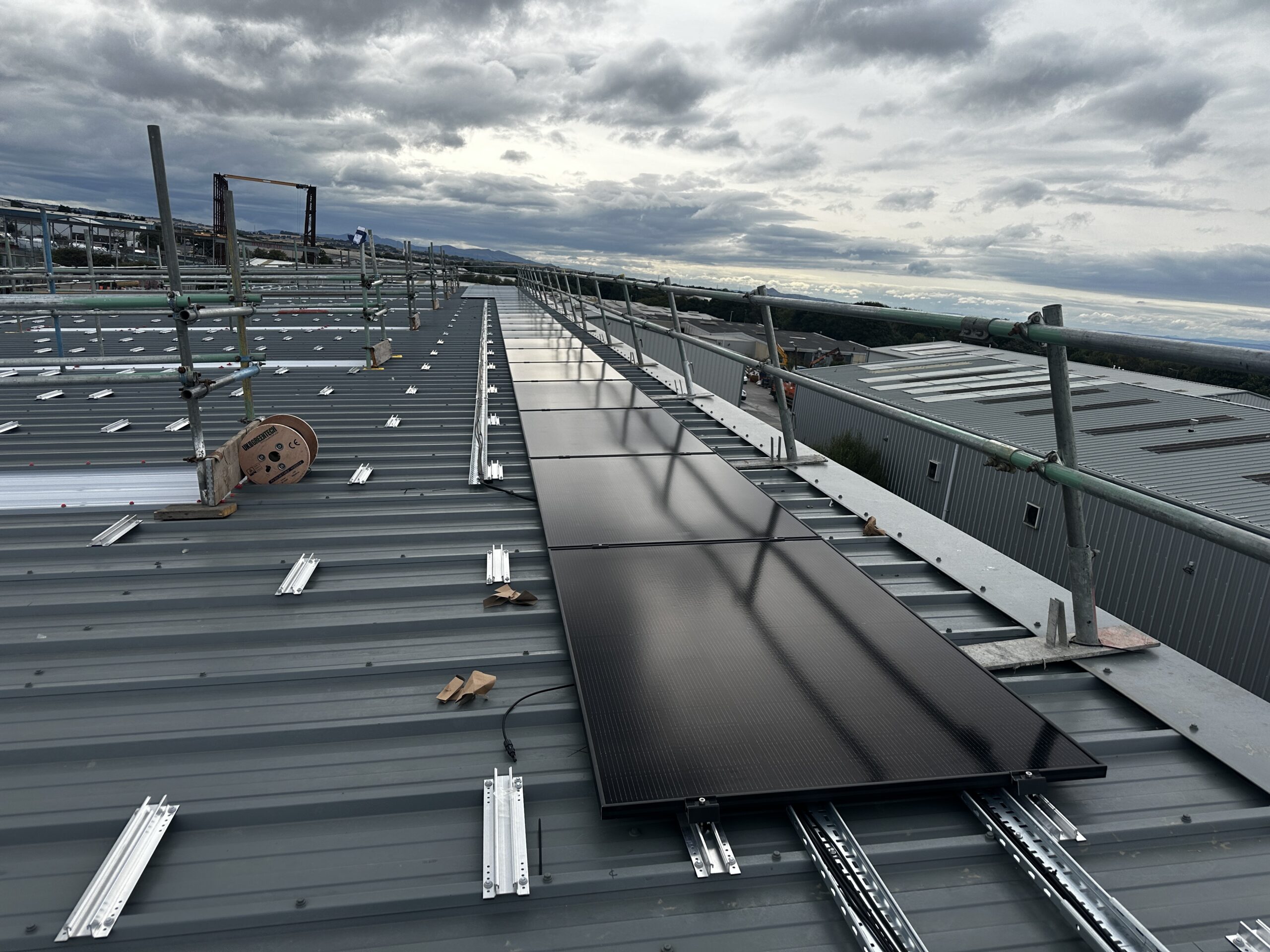
Planning permission and grid connection are separate parts of a commercial solar project. A proposal may be acceptable in planning terms but still require network approval, or it may have a straightforward connection route while needing planning consent.
Both should be reviewed early because they can affect system design, cost and programme.
Does commercial rooftop solar need planning permission in Scotland?
Some solar panels attached to non-domestic buildings fall within Scottish permitted development rights, subject to conditions and exclusions. The rules do not provide universal permission for every business property.
Particular care is needed where a building is listed, within the curtilage of a listed building, near an aerodrome or technical site, or in certain designated areas. The position also depends on the form and location of the equipment.
The Scottish Government’s current guidance on non-domestic permitted development rights should be checked against the proposed installation. The local planning authority determines whether an application or other consent is required.
What about ground-mounted commercial solar?
Ground-mounted solar within the curtilage of a non-domestic building has separate permitted-development provisions and limits. Scottish Government guidance states that the cumulative surface area covered under this particular right must not exceed 12 square metres, with further location restrictions and exclusions.
Many meaningful commercial ground-mounted schemes will therefore require project-specific planning advice and may require an application.
Planning issues to identify early
- listed-building or curtilage status;
- conservation and other designations;
- visibility and positioning;
- roof profile and equipment projection;
- ground-mounted array area and location;
- ecology, drainage, glare or landscape considerations where relevant; and
- conditions requiring equipment to be removed when it is no longer needed.
What is a commercial solar grid application?
Solar PV is generation connected to the electricity distribution network. The applicable engineering route depends on the system, equipment, capacity and connection arrangement.
Many commercial systems require a G99 application and acceptance before they are connected. Smaller or particular configurations may follow another route. An export limitation scheme may sometimes form part of the design, but it must be engineered and agreed appropriately.
Why grid capacity can change the design
The network operator assesses the effect of the proposed generation at the connection point and on the local network. Its response may influence permitted export, protection, equipment, programme or cost.
A commercial proposal should distinguish between:
- installed generation capacity;
- maximum export capacity;
- expected on-site consumption;
- any export-limitation arrangement; and
- the status and assumptions of the network application.
A sensible commercial solar project sequence
- Review the site, energy data and objectives.
- Develop an initial system concept.
- Identify planning, roof, structural and electrical constraints.
- Confirm the correct network-application route.
- Refine the design around responses and survey findings.
- Agree programme, scope and safety planning.
- Install, test, commission and complete the handover documentation.
The stages can overlap, but neither planning nor grid connection should be left as an unexplained assumption.
What to ask your commercial solar installer
- Who is responsible for confirming the planning position?
- What network application is expected, and who submits it?
- Is the proposed capacity subject to approval?
- Does the price include structural assessment?
- Are export limitation or network works assumed?
- What happens if approval changes the design?
- Which documents will be supplied at handover?
Frequently asked questions
Is G99 the same as planning permission?
No. G99 relates to the engineering requirements for connecting generation to the electricity distribution network. Planning permission concerns development and land-use controls. A project may need one, both or another applicable route.
Can an export limit avoid a network application?
No such assumption should be made. Export limitation must be properly designed and the applicable network process followed. The network operator confirms the connection requirements.
Who submits the grid application?
This should be agreed in the project scope. Renew-Able Solutions can prepare and manage the relevant network application for projects where that service is included.
Renew-Able Solutions supports commercial solar assessment, design, network applications and installation across Edinburgh, East Lothian and wider Central and East Scotland. Contact us with your site details to discuss the appropriate first step.
Planning and connection rules can change. This guide is general information and should be checked against current official guidance and the individual site.