
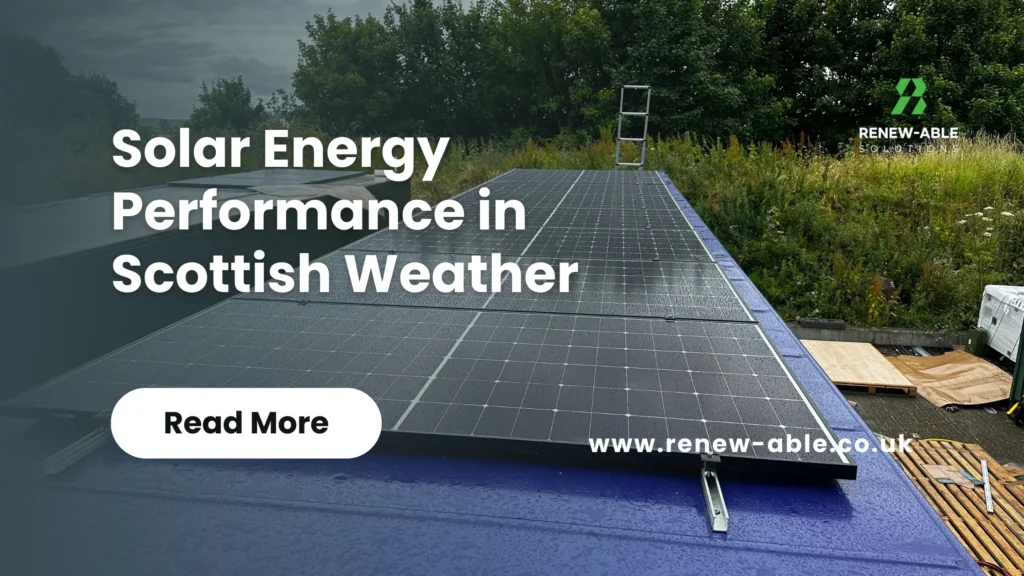
To be honest, Scotland is not famous for endless sunshine, which raises questions about the suitability of solar panels. However, advancements in solar technology show that modern solar panels can capture energy even on cloudy days, and the country’s cool, temperate climate actually helps them run efficiently.
It’s time to explore how solar performs in Scottish weather and how you can make the most of it.
Solar Energy in Scotland
Solar panels work by converting sunlight into electricity through photovoltaic (PV) cells. No doubt, direct sunlight is ideal, but PV systems can also generate power from scattered light.
As per the reports by Solar Energy Industries Association, solar panels can still generate electricity when light is reflected or partially blocked by clouds. This means that even on cloudy days, solar panels can produce electricity, but at reduced efficiency compared to clear, sunny days.
On average, the country receives about 850 to 1100 kWh of solar energy per square meter each year, just like other northern European countries. However, this level of solar energy is sufficient to make solar power a suitable option for both residential and commercial applications.
How Scottish Weather Affects Solar Panel Performance?
Scotland’s weather is usually cloudy, especially in winter, which can reduce the amount of electricity solar panels produce.
On cloudy days, panels may only generate 10–25% of their usual output. How much they are affected depends on how thick and dense the clouds are.
Even with these challenges, solar panels can still work during Scotland’s shorter, darker winter days. A few factors help them perform:
Diffuse Light
Modern solar panel installations can use scattered sunlight, so they still produce electricity on cloudy days. It is often 75–90% of their usual output.
Cool Temperatures
Solar panels work more efficiently in cooler weather. Scotland’s mild climate prevents overheating and keeps panels near their optimal performance.
Snow Reflection
Snow can reflect sunlight onto panels, which gives them a natural boost. Plus, panels’ dark surfaces help snow melt quickly, so energy production continues.
How To Maximize Solar Energy Output in Scotland?
To maximize solar energy production in Scotland’s weather, here are a few strategies:
- Install panels at the correct angle to get maximum exposure to available sunlight. In Scotland, south-facing roofs with a tilt angle of 30–40 degrees are perfect.
- Use battery storage to store extra energy during sunny days and use it during overcast days or nighttime. This ensures a continuous power supply.
- Keep panels clean and free from dirt so that they can absorb maximum light. A regular inspection team can also identify and deal with issues promptly.
- Implement monitoring systems to track energy production and consumption, and with this, you can adjust and optimize efficiency.
How Solar Panels Perform in Scottish Weather?
Modern solar panels can easily manage Scotland’s weather conditions. Here are the features that can improve their performance:
Durability
Solar panels perform well during tough weather like strong winds and heavy rainfall, which are common in Scotland. This means they can continue producing energy reliably, even during storms or wet seasons.
Cold-Weather Efficiency
Solar panels work better in cooler temperatures because the materials inside them face less resistance and can generate more voltage. This means panels can produce optimal energy despite the cold winter months.
Advanced Technology
Solar panels can capture and convert even low levels of sunlight into electricity. How? Because modern solar panels use anti-reflective coatings and materials such as monocrystalline and polycrystalline, and thin-film cadmium telluride.
Benefits of Solar Energy Despite Scottish Weather
Here are various benefits if you invest solar energy in Scotland:
Cost Savings
With solar energy and panels, you can reduce dependency on the grid and save money on electricity bills. With rising energy costs, solar power provides a stable energy expense.
Government Incentives
There are many incentives and grants from the government to support the installation of solar systems. So, the initial investment is more affordable.
Environmental Impact
Another perk is, solar energy is a clean, renewable resource that reduces carbon emissions. It is a great contributor to Scotland’s sustainability goals.
Energy Independence
When you can generate your own electricity, it decreases dependence on external energy sources, which can improve energy security.
Renew-Able Solutions- The Best Solar Energy Provider in Scotland
Renew-Able Solutions is one of the top solar energy providers in Scotland. You can get customized renewable energy solutions for both residential and commercial clients.
They have more than 20 years of experience, and they specialize in the design and installation of solar photovoltaic (PV) systems, battery storage, air and ground source heat pumps, etc.
They also offer guidance on available grants and funding options to help clients reduce upfront costs and achieve long-term energy savings.
Final Words
Now, you can make your decision easily after developing an understanding of how solar energy performs in Scottish weather. This is one of the best investments while living in this country. Now, get your solar panels and get the most out of them. Cheers!