Can you live off-grid in the UK using solar panels and batteries? It is technically possible, but reliable year-round supply needs careful design around the property’s demand, winter generation and backup arrangements. Reducing grid use is a different, often simpler objective.
In this blog, we’ll investigate how to go off the grid with solar panels and assess, crucially, if or when it’s worthwhile.
What does off-grid mean?
Off-grid can refer to a property without mains electricity, gas, water or drainage. Here, we focus on energy: homes with no connection to the electricity or natural gas grids.
How much energy does an average property use?
Use your own electricity bills and, where available, half-hourly meter data as the starting point. Occupancy, insulation, heating and EV charging can make one household’s demand very different from another’s. A national average cannot size an off-grid system.
Illustrative household scenario: the figures below are explicit assumptions to explain the calculation. They are not UK averages, a measured customer installation or a system recommendation.
| Assumption | Annual amount |
|---|---|
| Household electricity excluding heating and EV charging | 3,000kWh |
| Useful heat required for heating and hot water | 12,000kWh of heat |
| Assumed seasonal heat-pump performance | 3 units of heat per unit of electricity |
| Calculated heat-pump electricity: 12,000 ÷ 3 | 4,000kWh |
| Total electricity: 3,000 + 4,000 | 7,000kWh |
The heat-pump figure assumes the stated seasonal performance covers all the heat in this example. Real demand should include hot-water settings, auxiliary heaters and other system consumption. The Energy Saving Trust’s heat-pump guide explains how heat pumps transfer heat into the home. We can assess a proposed heat-pump installation against the building’s requirements.
For illustration, assume solar yield of 850kWh per installed kWp each year. Producing 7,000kWh over a year would then require 7,000 ÷ 850 = approximately 8.24kWp. This yield is an assumption, not a site forecast, and the calculation excludes battery losses and additional off-grid system consumption. It is an annual energy comparison, not a design capable of supplying the home continuously.
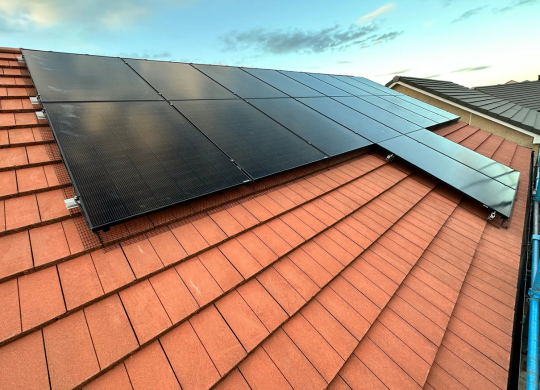
Actual yield depends on location, orientation, shading and equipment. The Energy Saving Trust’s solar guidance explains these factors. Also estimate EV charging separately, using mileage, vehicle consumption and charging losses.
How does energy demand throughout the year correlate with solar generation?
Annual generation can match annual consumption while still leaving substantial winter and overnight shortfalls. Heating demand rises in colder months, when days are shorter and solar generation is lower.
An off-grid assessment needs to compare demand and generation through the year, including prolonged low-generation periods. However, an ordinary household battery does not make summer surplus a reliable source of winter energy. A larger array may also produce more electricity than the home and battery can accept.
The impact of battery storage
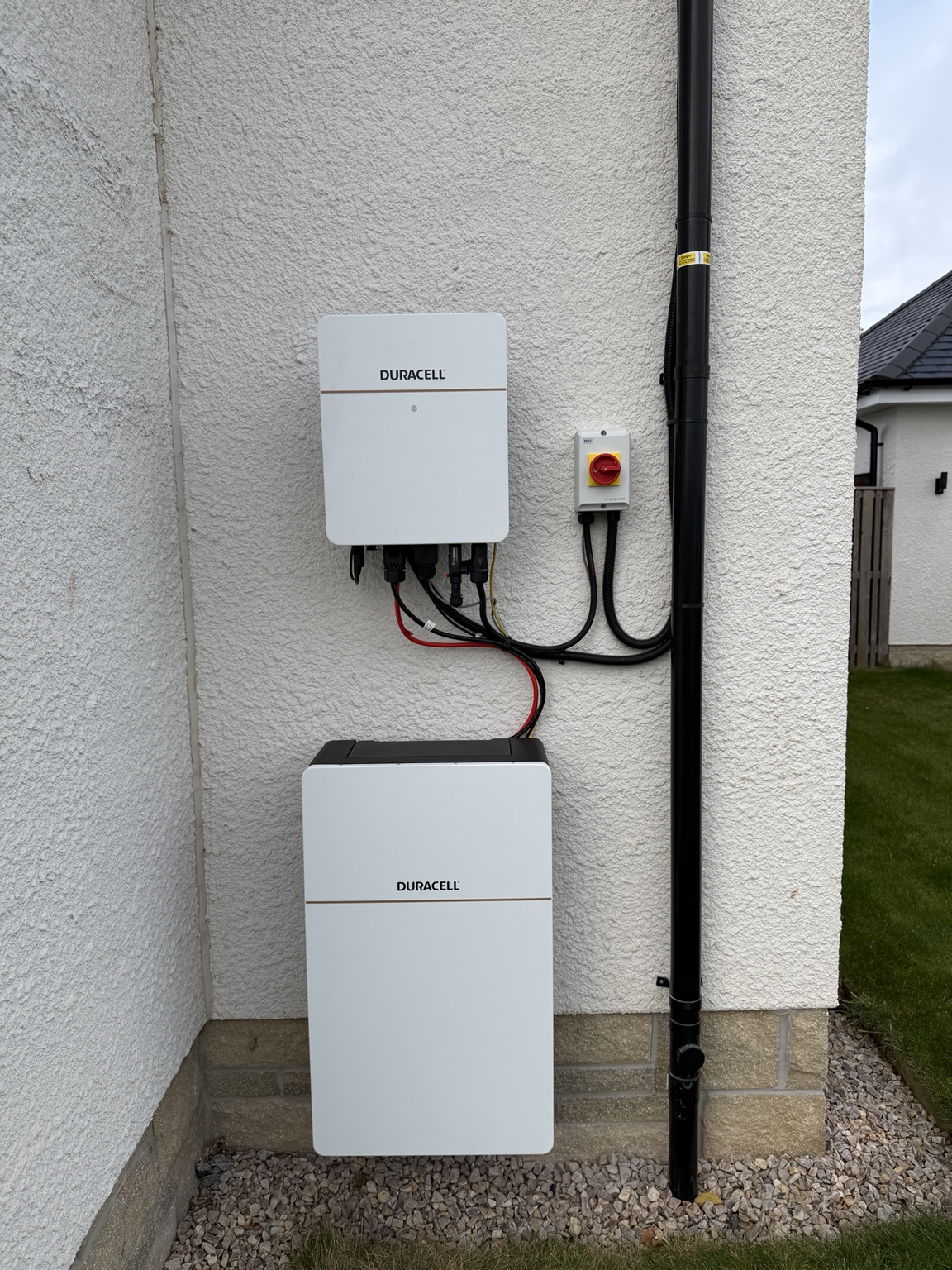
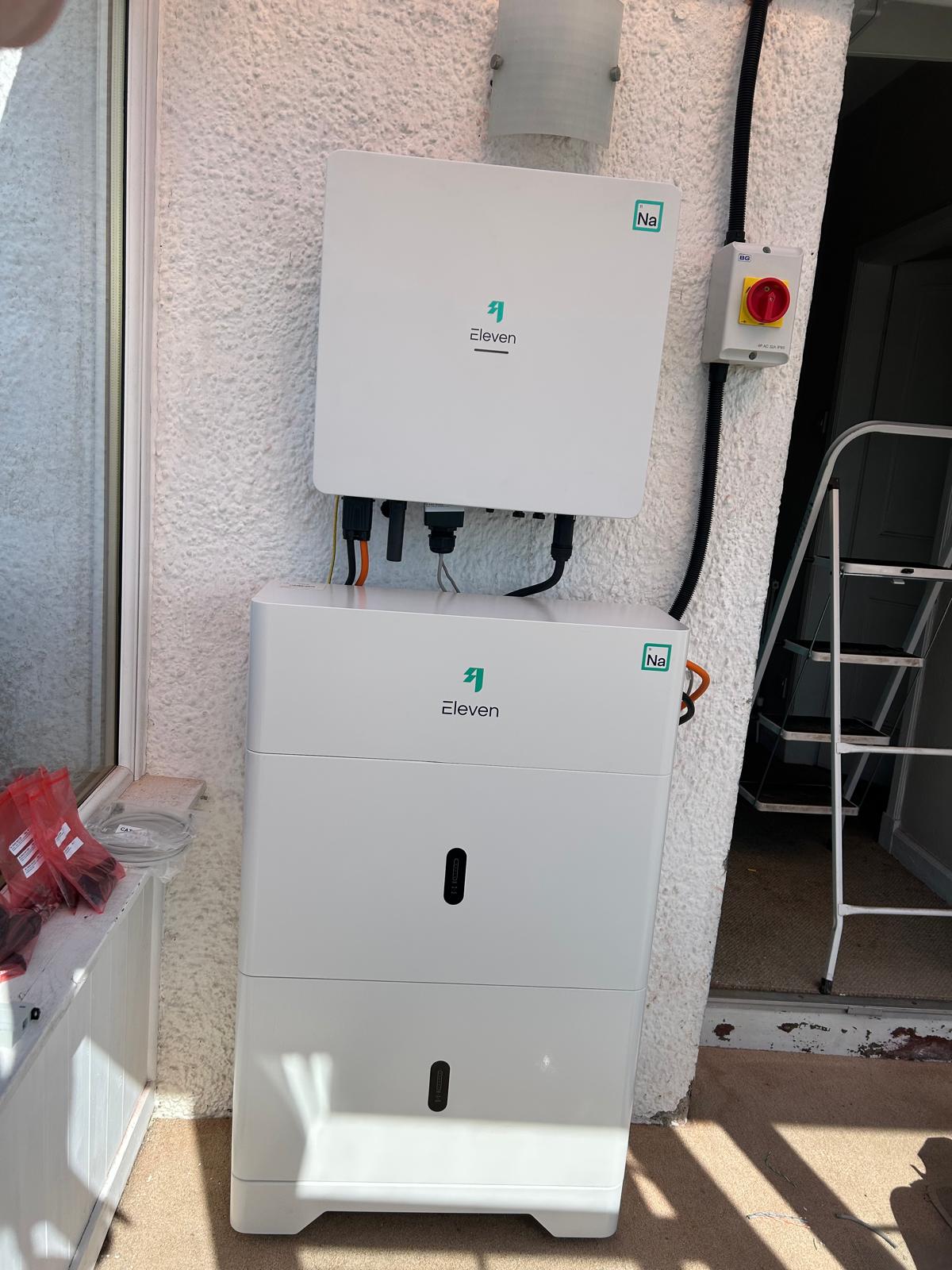
A battery moves energy from one time to another; it does not create electricity. Its usable energy capacity in kWh determines how much it can store, while its power rating in kW limits what it can run at once.
In the illustrative 7,000kWh scenario, average daily consumption is 7,000 ÷ 365 = 19.2kWh. A fully charged battery with 15kWh of usable capacity would cover about 15 ÷ 19.2 = 0.78 days, or 18.8 hours, at that constant average demand, before discharge losses and with no new generation. Winter demand may be considerably higher.
This arithmetic does not predict real backup duration. Allow for reserve settings, efficiency, ageing, temperature and the appliances running. Read our guide to battery storage with backup power: specify backup capability separately, because not every grid-connected system powers a home during an outage.
What you would need to go off-grid?
A reliable design needs a property-specific assessment of electricity use, peak simultaneous loads, seasonal generation, usable storage and the acceptable length of any interruption. It should also account for inverter capability, system losses and maintenance.
If solar and storage cannot meet the required reliability, the design may need a suitable backup energy source. Its fuel, running costs, servicing, siting and environmental effects belong in the assessment. Annual electricity consumption alone cannot determine the generator requirement.
Ask for a time-based energy model that shows shortfalls as well as surpluses, and explains the weather assumptions and backup strategy. Use the arithmetic above to understand the calculation, rather than to specify equipment.
Is it worth it?
For a property without an electricity connection, compare a complete off-grid quotation with the cost and practicality of connecting to the grid. Include maintenance, replacements and any backup fuel, not just panels and batteries.
For a connected home, solar PV and appropriately sized storage can reduce imported electricity while retaining access to the grid when required. The cost of solar and likely savings depend on the property and how you use energy.
Enquire with us to assess your property’s demand and the practical options for reducing reliance on the grid.